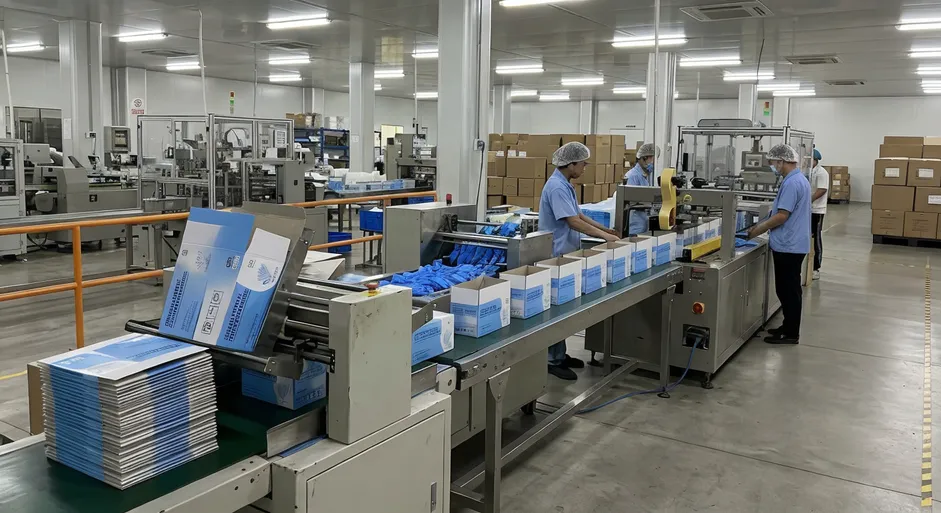
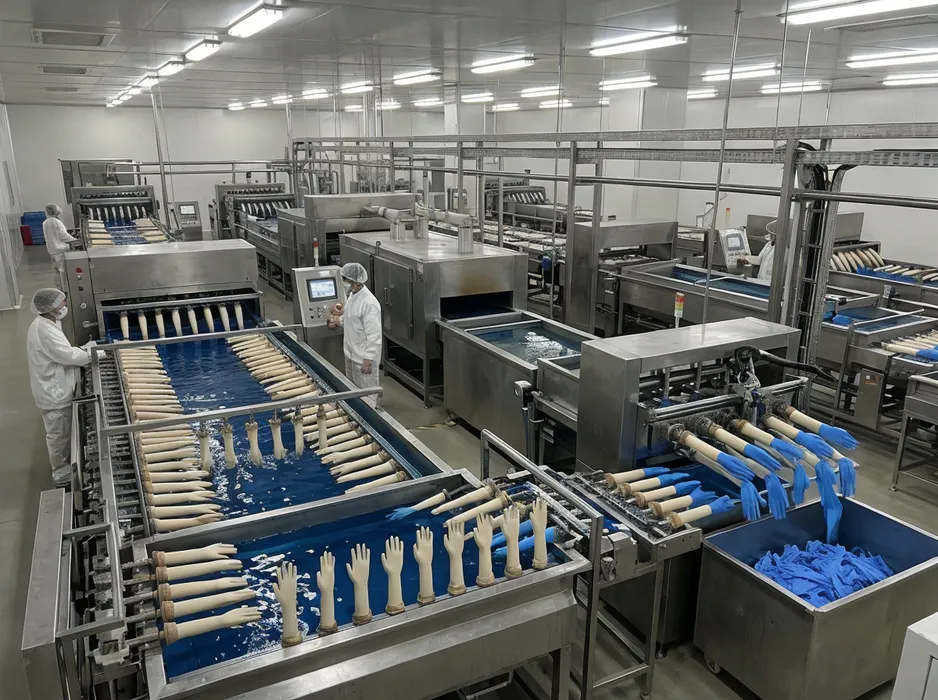
Examination, surgical, cleanroom, and laboratory grades from a single certified manufacturer. Eight automated dipping lines, in-house nitrile compounding, and 100% AQL 1.5 outgoing inspection.
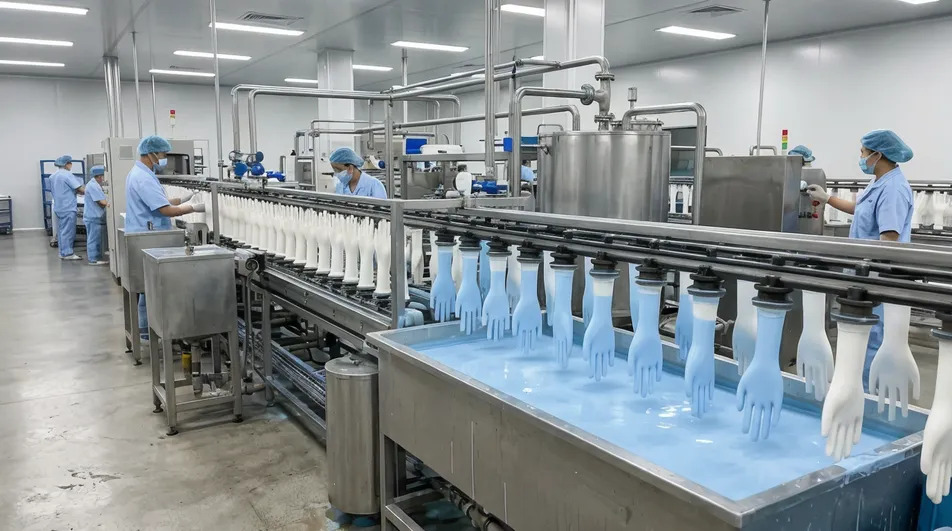
Medical nitrile gloves are the core of what we do at glovemfg. Not a line item in a broader PPE catalog — the entire facility, all 18,000 square meters of it, is built around nitrile glove production. We've been running since 2007, and the medical-grade segment has been part of the product mix from the beginning.
EN 455 covers European medical procurement. ASTM D6319 and FDA 510(k) clearance cover North American healthcare and industrial distribution. We hold all three, along with ISO 9001:2015 and CE marking.
If your downstream customers operate in regulated procurement environments — public health tenders, government supply contracts, hospital group purchasing organizations — the compliance documentation is already in order. You're not waiting on us to get certified before you can close a deal.
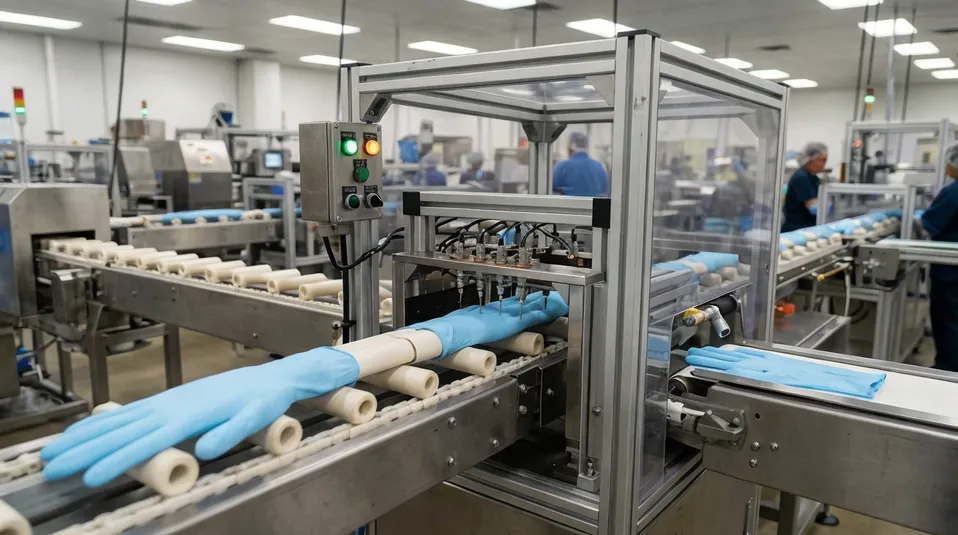
A glove that passes AQL at our facility and then fails at your destination port is a container you can't sell. We run 100% AQL 1.5 outgoing inspection — tighter than the AQL 2.5 default at most factories — with online electrical pinhole detection on every line.
Every glove passes the leak test before it reaches the stripping station. That's not a final inspection step; it's a continuous in-process filter that keeps defective units out of your cartons before they're ever counted and packed.
8 fully automated dipping lines, 1.2 billion pieces annual output. Your container order doesn't displace another customer's production run.
We maintain a rolling schedule for repeat buyers on established SKUs, which means you get a confirmed ship date at order time, not after production planning.
When you're sourcing medical nitrile gloves for distribution into hospital groups, dental networks, clinical labs, or surgical suites, the certification paperwork is the first filter. Our 18,000 square meter facility has been dedicated to nitrile glove production since 2007 — not a diversified PPE plant that added gloves as a secondary line.
In-house nitrile compounding gives us direct control over formulation consistency batch to batch. That control is what makes our AQL 1.5 commitment sustainable at scale, not just achievable on a sample run.
Learn More About Our FacilityEight sub-products under this category, organized by application and specification tier. Each addresses a distinct procurement segment — the right choice depends on your end market, the regulatory environment your buyers operate in, and the performance specifications their procurement teams require.
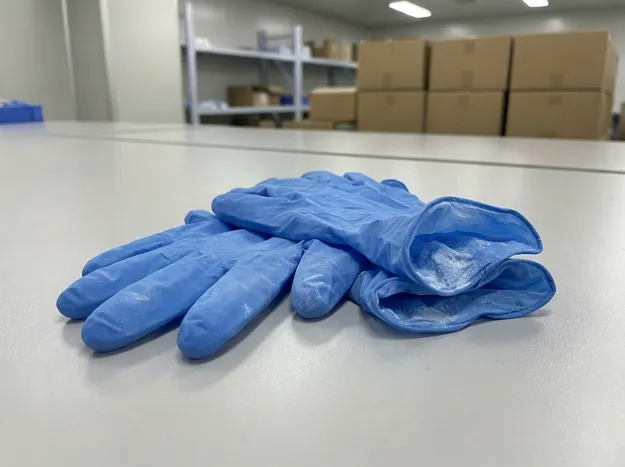
The standard examination glove — powder-free, 0.08–0.12mm palm thickness, textured fingertip, available in blue, black, and white. Passes EN 455 and ASTM D6319. The volume SKU for medical distributors supplying GP clinics, outpatient facilities, and general hospital wards.
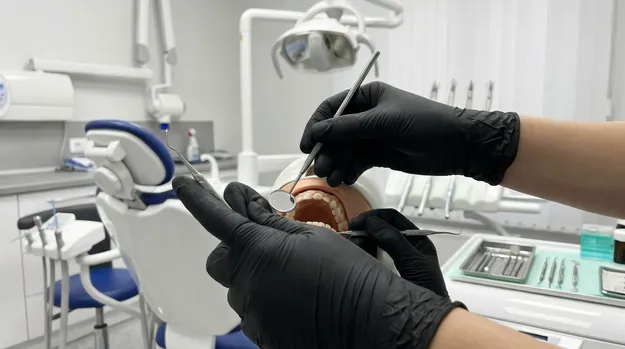
Same EN 455 / ASTM D6319 specification as the standard examination glove, in black. The color distinction matters commercially: dental practices, aesthetic clinics, and tattoo studios use black gloves as a visual differentiator — it's a segment that pays a modest premium and reorders consistently. We've seen this SKU grow steadily in North American and European distributor accounts over the past several years — worth including in your medical distribution line if you're not already carrying it.
White examination gloves for markets where color coding by department is standard practice — common in European hospital procurement and certain Middle Eastern healthcare systems. Same powder-free, AQL 1.5 specification. White also photographs cleanly for private-label packaging, which makes it a common choice for OEM buyers building branded medical lines.
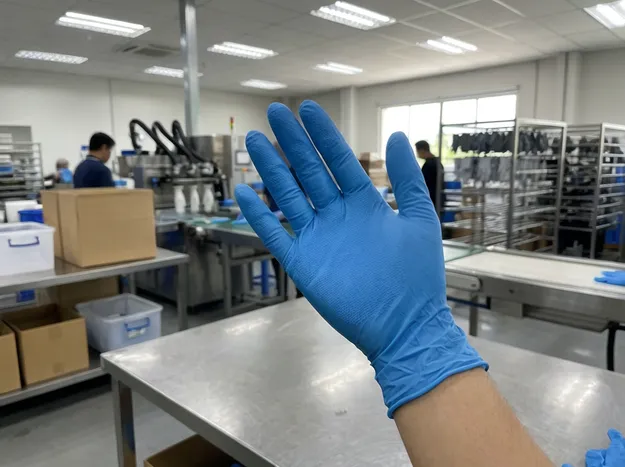
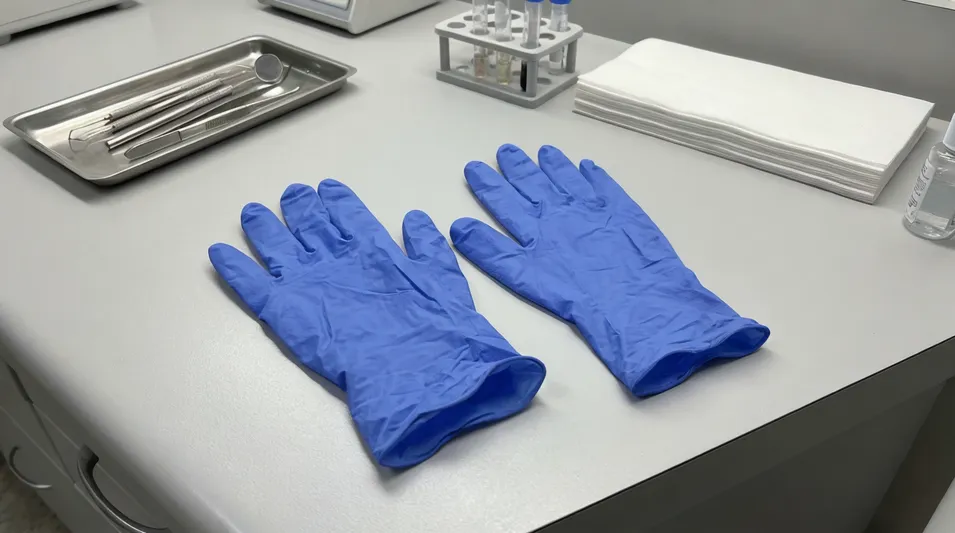
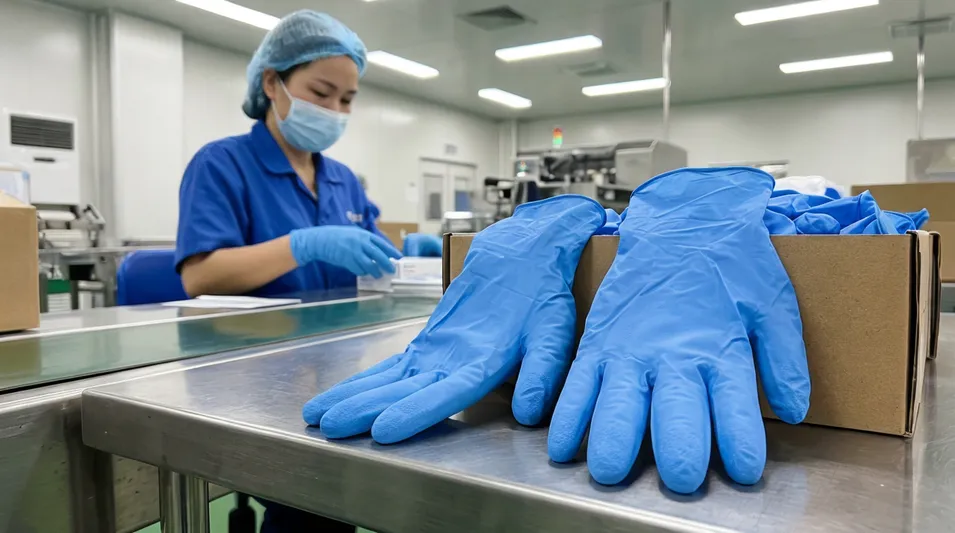
The default color for examination gloves in most North American and Southeast Asian markets. Blue provides clear contrast against skin for visual inspection during procedures. Standard examination weight, powder-free, EN 455 and ASTM D6319 compliant. The highest-volume SKU in this category for our North American distributor accounts.
View Product
Corn-starch powdered variant for markets where powdered gloves remain in active procurement — certain Southeast Asian hospital systems and some Middle Eastern markets still specify powdered gloves for donning ease in high-volume clinical environments.
Market note: Powdered gloves are banned for surgical use in the US (FDA rule effective 2017) and restricted in EU medical device procurement. This SKU is appropriate for markets where powdered examination gloves remain compliant.
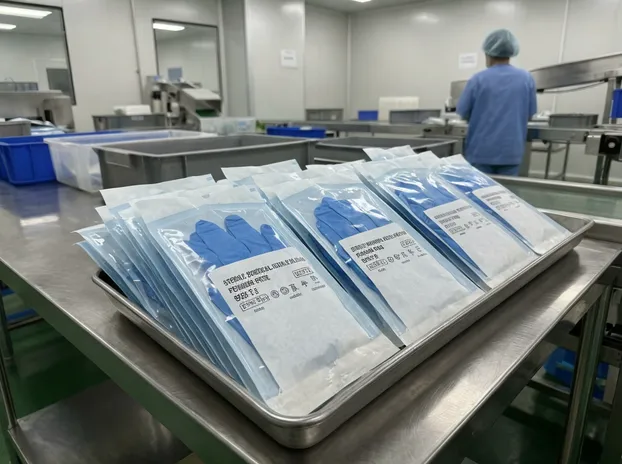
Sterile, individually packaged, higher-thickness profile (0.13–0.15mm) with anatomical shaping and a smoother inner surface for donning over surgical scrub. Passes EN 455 sterile surgical glove requirements.
The procurement cycle for surgical gloves is longer and more documentation-intensive than examination gloves — hospital procurement committees typically require lot traceability records and sterility validation data, which we provide as part of the standard documentation package.
View Product
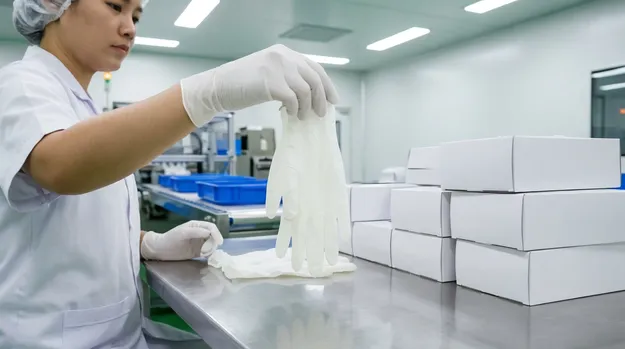
Low-particulate, low-ionic-contamination nitrile gloves for pharmaceutical manufacturing, medical device assembly, and semiconductor-adjacent applications. Packed in cleanroom-compatible packaging, double-bagged.
The specification that matters here is extractables — our cleanroom variant is produced on a dedicated line with a formulation tuned for low leachable content, and we can provide extractables test data on request.
If your buyers are pharmaceutical manufacturers or medical device assemblers, this is the SKU that gets you into their approved vendor lists.
View Cleanroom Nitrile Gloves
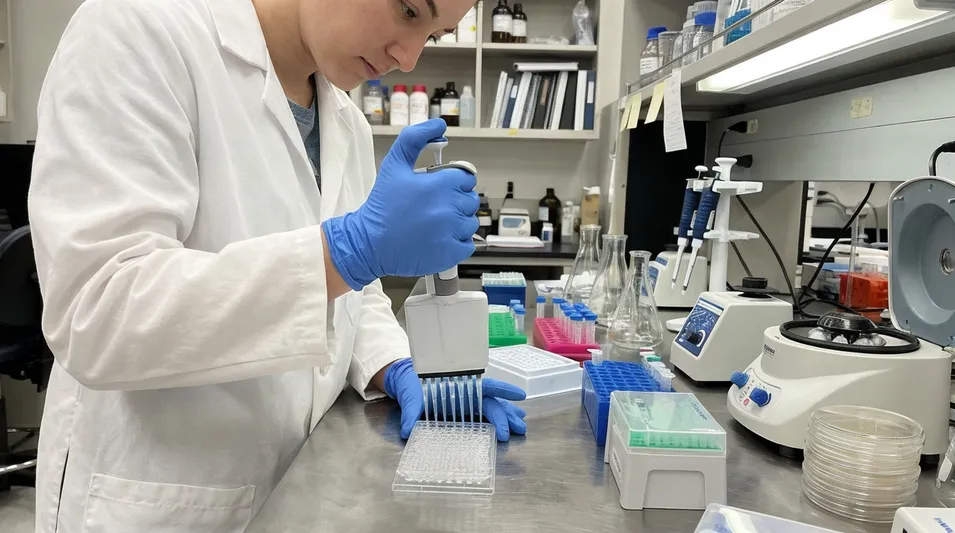
General-purpose lab gloves for research institutions, clinical laboratories, and university science departments. Powder-free, 0.10–0.12mm, textured fingertip for grip on labware. Not sterile.
This is the workhorse SKU for high-volume lab consumable distributors.
Lab procurement tends to run on annual contracts with predictable reorder cycles, which makes it a stable segment for distributors building recurring revenue.
View Laboratory Nitrile GlovesThese are the parameter ranges across the medical nitrile glove line. Individual product pages carry the exact specifications for each SKU.
| Parameter | Range / Standard |
|---|---|
| Material | 100% synthetic nitrile butadiene rubber (NBR) |
| Thickness — palm | 0.08–0.15mm (varies by SKU) |
| Thickness — finger | 0.10–0.18mm (varies by SKU) |
| Thickness tolerance | ±0.01mm across production run |
| Tensile strength | ≥14 MPa (EN 455-2 / ASTM D6319) |
| Elongation at break | ≥500% (pre-aging) |
| AQL inspection standard | 1.5 (100% of outgoing lots) |
| Pinhole detection | Online electrical leak test, every glove |
| Powder status | Powder-free (all SKUs except powdered variant) |
| Accelerator status | Standard: thiuram/carbamate cure; Accelerator-free: available on request |
| Sizes | XS, S, M, L, XL |
| Colors | Blue, black, white (standard); custom color on OEM runs |
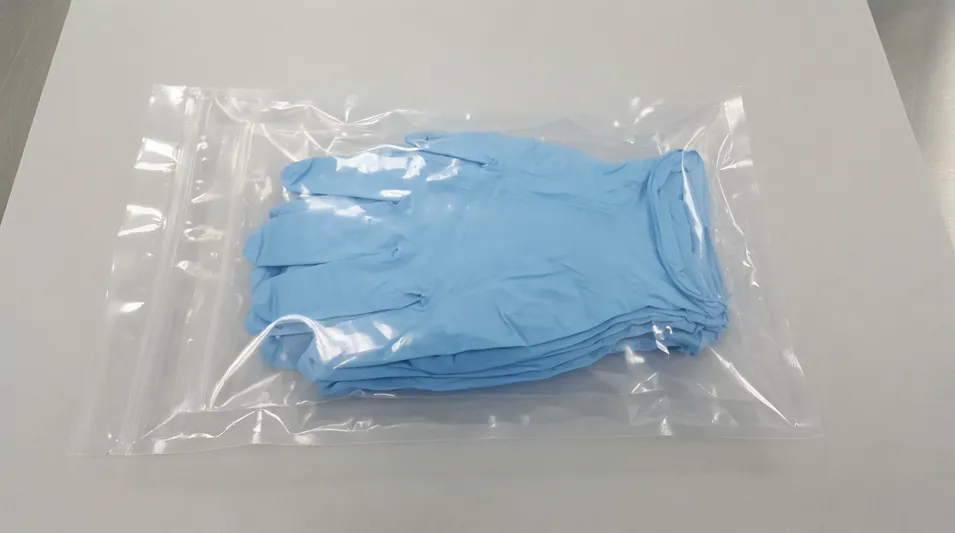
| Packaging | 100 pcs/box, 10 boxes/carton (standard); custom packaging for OEM |
| Certifications | ISO 9001:2015, CE, EN 455, ASTM D6319, FDA 510(k) |
| Sterility | Non-sterile (examination/lab/cleanroom); EO-sterilized (surgical) |
Standard nitrile gloves use thiuram and carbamate accelerators in the vulcanization process. These accelerators are the primary documented cause of Type IV delayed hypersensitivity reactions in healthcare workers — a growing compliance concern in European hospital procurement, particularly in Scandinavia, the UK, and Germany, where occupational health regulations are tightening around chemical sensitizers in medical PPE.
We run accelerator-free compound on a dedicated line, using a sulfur-donor cure system instead of the conventional accelerator package. The resulting glove passes EN 455 with no detectable accelerator residue. The physical properties — tensile strength, elongation, thickness — are comparable to the standard formulation; the difference is in the vulcanization chemistry, not the end-product feel.
For distributors supplying European hospital groups, dental networks, or any procurement environment where Type IV allergy documentation is part of the tender specification, accelerator-free is the specification that gets you shortlisted. Standard nitrile doesn't fail those tenders — it simply doesn't qualify for the accelerator-free line items, which are increasingly carved out as separate SKUs in European public health procurement.
Discuss Accelerator-Free SpecificationsAccelerator-free compound runs on a segregated line using a sulfur-donor cure system — no cross-contamination with standard thiuram/carbamate formulations.
Passes EN 455 with no detectable accelerator residue. Physical properties — tensile strength, elongation, thickness — are comparable to the standard formulation.
Accelerator-free variants available across examination, surgical, and cleanroom SKUs. MOQ: one 40HQ container.
Procurement reality: If you're building a European medical distribution line and haven't added accelerator-free to your catalog yet, this is the conversation to have before your competitors do. Accelerator-free line items are increasingly carved out as separate SKUs in European public health procurement — standard nitrile simply doesn't qualify for those tender categories.
One of the friction points in sourcing medical gloves internationally is certification alignment — a glove that's compliant in one market may require additional documentation or a different specification for another. Here's where our current certification stack lands:
| Market | Relevant Certification | Status |
|---|---|---|
| European Union / EEA | CE marking + EN 455 (Parts 1–4) | Held |
| United States | FDA 510(k) clearance + ASTM D6319 | Held |
| Canada | Health Canada — references ASTM D6319 | Covered via ASTM |
| Australia / New Zealand | TGA — references EN 455 for medical gloves | Covered via EN 455 |
| Middle East (GCC) | SASO / GSO — typically references EN 455 | Covered via EN 455 |
| Southeast Asia | Varies by country; EN 455 widely accepted | Covered via EN 455 |
Covers the quality management system across all production lines — not limited to a single product category or market.
We coordinate with SGS and Bureau Veritas for buyers whose procurement process requires third-party inspection. Routine on North American and European orders.
CE declaration of conformity, FDA 510(k) reference number, EN 455 test reports, and AQL records for the specific production lot ship with every order — including sample orders.
The most common sourcing mistake we see is treating all medical nitrile gloves as interchangeable and selecting on price alone. Thickness and formulation are the two variables that determine whether a glove fits a specific procurement environment — and getting them wrong creates downstream problems that cost more than the price difference.
The standard for general clinical use — GP consultations, outpatient procedures, nursing care. Thin enough for tactile sensitivity, thick enough to pass EN 455 barrier integrity requirements.
This is the volume tier; it's where most distributor revenue sits.
The overlap zone between examination and procedure gloves. Common in dental, where practitioners want slightly more puncture resistance than a standard exam glove without moving to a full procedure-weight SKU.
Also standard for laboratory and cleanroom applications where chemical splash resistance matters more than tactile sensitivity.
Higher puncture resistance, longer wear time, anatomical shaping on the surgical variant. The procurement cycle is longer and documentation requirements are more intensive.
Margin per unit is higher and the competitive set is smaller. See our surgical nitrile gloves page for full specifications.
Not a thickness tier — a chemistry decision. Applicable across examination and surgical weights. The relevant question is whether your target market's procurement specifications call it out.
If you're selling into European hospital tenders, check the tender documents; accelerator-free line items are increasingly standard.
If you're building a new medical distribution line, we'd suggest starting with powder-free SKUs. The regulatory trajectory in most developed markets is away from powdered gloves, and the inventory risk of holding powdered stock for a shrinking market segment is real. Our powdered medical nitrile gloves remain available for markets where demand persists.
Medical glove failures in the field fall into three categories, and all three have manufacturing root causes that are preventable.
The most common reason a container of medical gloves gets rejected at a destination port or fails incoming inspection at a hospital distribution center.
Root Cause
Dipping process issues — bath temperature drift, compound viscosity variation, or former surface contamination causing thin spots or micro-tears.
Our Engineering Response
Online electrical pinhole detection on every line, every glove, before stripping. Gloves that fail the leak test are pulled automatically and never reach the counting stage. Outgoing AQL 1.5 inspection is a second filter — by the time a carton is palletized, it has passed two independent quality gates.
A glove that measures 0.10mm on the sample set and 0.07mm on the 50th carton is a formulation and process control problem. We see this regularly in competitor product that our buyers bring to us after a bad experience.
Root Cause
Third-party compound with batch-to-batch viscosity variation. When the compound changes, the dipping thickness changes — and if the factory doesn't own the formulation, they can't correct it.
Our Engineering Response
We mix our own compound in-house. Bath viscosity is monitored continuously on every line. Thickness is checked at palm, finger, and cuff every two hours per line per shift. If a line drifts outside the ±0.01mm tolerance, it stops.
Type IV allergic reactions in healthcare workers are a liability issue for hospital procurement departments and a warranty claim issue for distributors.
Root Cause
The standard nitrile formulation is the source. Accelerator residue from the vulcanization process remains in the finished glove and triggers sensitization in susceptible users.
Our Engineering Response
The accelerator-free variant eliminates it. If you're supplying markets where this is a documented concern, the SKU selection is the fix — not a quality control issue on the standard product.
Two Independent Quality Gates
Inline Electrical Pinhole Detection
Every line, every glove, before stripping. Automatic rejection — failed gloves never reach counting.
Outgoing AQL 1.5 Inspection
Applied at carton level before palletization. A second independent filter on top of inline detection.
100
pcs / box
10
boxes / carton
~2,000
cartons / 40HQ
2M
gloves / container
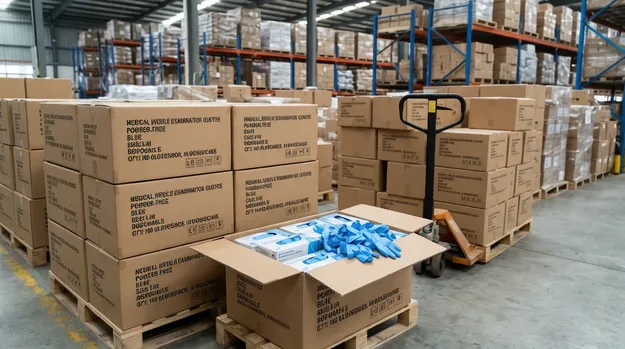
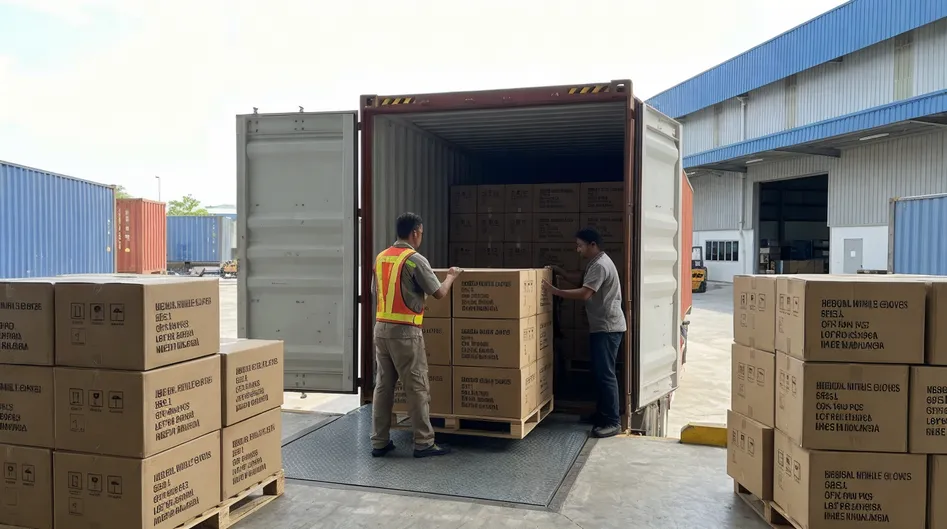
A properly loaded 40HQ container carries approximately 2,000 cartons — 2 million gloves — without wasted cubic space. The pallet configuration is established; it is not improvised per order.
Individual sterile packaging increases carton volume — a 40HQ carries fewer units by count, but the per-unit value is higher. The economics still work at container scale.
Sample orders include the full certification documentation package for the specific production lot.
Carton labeling can be configured to your requirements. Standard documentation is included on every shipment.
Pre-shipment inspection is routine for North American and European accounts.
New Buyer Path
Sample orders ship within 5–7 business days and include the full certification documentation package for the specific production lot — so your quality team can verify compliance before committing to container volume.
Request SamplesMedical nitrile gloves are a consumable. The procurement cycle is predictable, the reorder frequency is high, and the switching cost for a buyer who has qualified a supplier is real. These are the segments where distributor and importer accounts build durable revenue.
Large hospital groups and GPOs run annual or multi-year supply contracts. Volume is high, documentation requirements are intensive, and the qualification process takes time — but once you're on an approved vendor list, the reorder cycle is automatic.
Entry Requirements
EN 455 and FDA 510(k) — AQL consistency keeps you on the list.
Dental practices are high-frequency, moderate-volume buyers. A mid-sized dental distributor serving 500 practices moves significant glove volume on monthly reorder cycles.
SKU Note
Black gloves have become a visual standard in many dental markets — worth carrying as a separate SKU alongside standard blue.
Cleanroom and laboratory grades. Procurement is specification-driven and vendor qualification is rigorous, but once qualified, the supply relationship is sticky.
Differentiators
Extractables data and lot traceability documentation are the key differentiators here.
Reference labs, hospital lab departments, and independent diagnostic labs are consistent high-volume buyers of examination and laboratory-grade gloves.
Procurement Pattern
Annual contracts with predictable reorder cycles — a stable segment for distributors building recurring revenue.
Growing segment in North America, Europe, and the Middle East. Black gloves are the standard. Procurement is less documentation-intensive than hospital procurement, and price sensitivity is lower.
Buyer Priority
These buyers care about appearance and consistency more than hitting the lowest per-box price.
Explore Product Lines
Each segment has distinct grade and documentation requirements. Navigate to the relevant product page for specification details.
If you're building a branded medical glove line, the production capabilities are here. Custom formulation, color matching from Pantone reference, private-label packaging design, and specification sheets under your brand name — all handled from the same facility, no third-party subcontracting.
Custom Formulation & Color Matching
Pantone reference color matching and formulation development handled in-house. No third-party subcontracting.
Private-Label Packaging
Packaging design and specification sheets under your brand name. Full documentation support included.
Accelerator-Free OEM Runs
The accelerator-free variant is available for OEM runs. If you're positioning a premium medical line for European hospital distribution, accelerator-free with your brand name is a defensible product position — the number of suppliers who can produce it with EN 455 documentation is smaller than the standard examination glove market.
MOQ Reference
Standard SKUs — Private-Label Packaging
One 40HQ container (approximately 2,000 boxes)
Custom Formulation Projects
One 40HQ container, with a development lead time for formulation sign-off before production.
Accelerator-free with your brand name is not a commodity specification. The number of suppliers who can produce it with EN 455 documentation is smaller than the standard examination glove market — making it a genuine differentiator for European hospital distribution channels.
ISO 9001:2015, CE marking, EN 455 (Parts 1–4 for medical gloves for single use), ASTM D6319 (nitrile examination gloves), and FDA 510(k) clearance. These cover the primary regulatory requirements for medical glove procurement in the EU, US, Canada, Australia, and most Middle Eastern and Southeast Asian markets. Full documentation — CE declaration of conformity, FDA 510(k) reference, and lot-specific test reports — ships with every order.
Standard nitrile uses thiuram and carbamate chemical accelerators in the vulcanization process. These accelerators are the documented cause of Type IV delayed hypersensitivity reactions in some healthcare workers. Accelerator-free nitrile uses a sulfur-donor cure system instead — the physical properties are comparable, but there is no detectable accelerator residue in the finished glove. It matters when your buyers operate in procurement environments where Type IV allergy documentation is part of the tender specification — increasingly common in European hospital and dental procurement. If you're supplying standard nitrile into those markets, you may be excluded from accelerator-free line items regardless of price.
We inspect 100% of outgoing production lots to AQL 1.5. The industry default at most factories is AQL 2.5. AQL 1.5 means a tighter acceptable quality limit — statistically, fewer defective units per lot reach your warehouse. Combined with online electrical pinhole detection on every line (which pulls failing gloves before they're counted and packed), the practical result is cleaner incoming inspection results at your destination and fewer complaints from your downstream customers.
One 40HQ container for standard examination SKUs — approximately 2,000 boxes (200,000 gloves) at standard pack configuration. For OEM/private-label runs, MOQ is also one 40HQ container. Sample orders are available before full container commitment; samples ship within 5–7 business days with the full certification documentation package.
Yes. Custom color matching (from Pantone reference), custom formulation (including accelerator-free, specific elongation targets, or chemical resistance profiles), and private-label packaging are all handled in-house through our compounding lab and OEM production process. Custom formulation projects require a development phase for formulation sign-off before production begins. Contact us with your target specification and we'll confirm feasibility and lead time.
The two most common causes are pinhole failures (thin spots or micro-tears from dipping process variation) and thickness drift across a production run (from compound batch inconsistency). We address both: online electrical pinhole detection pulls failing gloves automatically before they reach packing, and we mix our own nitrile compound in-house so we control batch-to-batch viscosity. Thickness is checked at palm, finger, and cuff every two hours per line per shift. If a line drifts outside tolerance, it stops — we don't run out-of-spec product and sort it later.
glovemfg ships to North America, Europe, the Middle East, Southeast Asia, and Australia. If you're evaluating us as a supplier, the fastest path is a sample order — we'll ship samples within 5–7 business days with the full certification documentation package for the specific production lot, so you can run your own incoming inspection before committing to a container.
If you already know your specification and volume, send us the details and we'll turn around a quote with confirmed lead time.