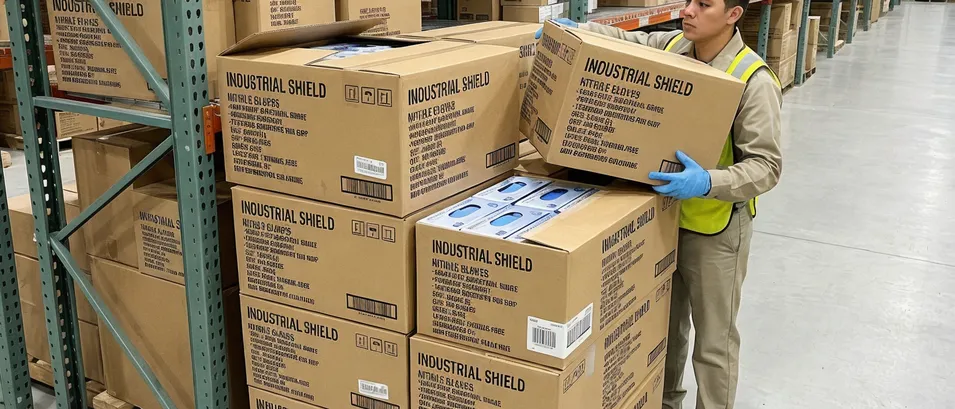
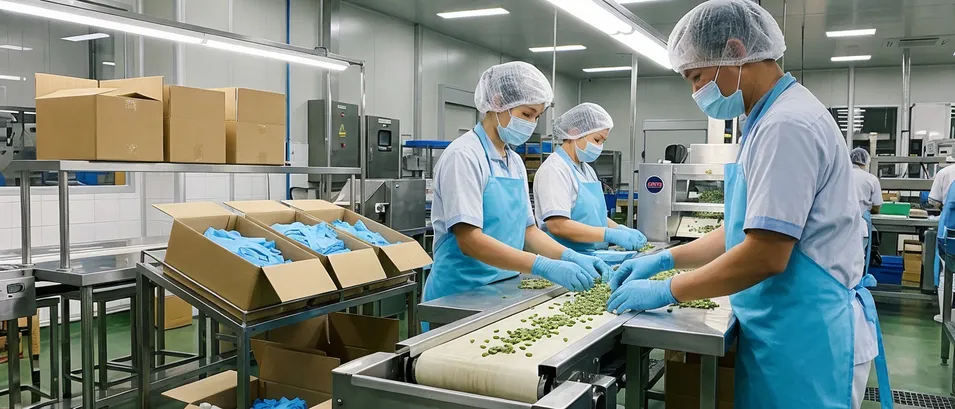
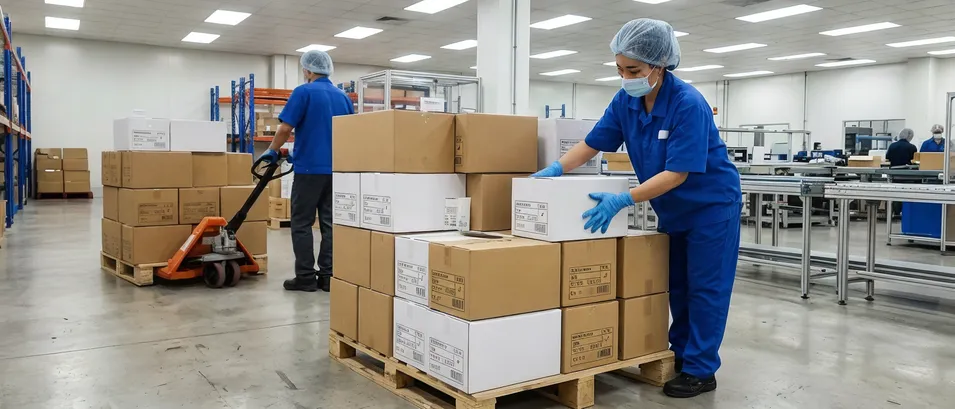
Custom formulation, private label, and spec-matched production from a single dedicated facility. We've been building private-label nitrile glove programs since 2007. The compounding lab, the certified lines, and the export documentation are all in-house — no subcontracting, no middlemen in the production chain.
Understanding Your Options
These two terms get used interchangeably by a lot of factories. They're not the same, and the difference matters when you're planning a product launch or a private-label program.
Model A
You bring the specification. Your target thickness, your color, your packaging design, your brand name on the box. We manufacture to your spec, hold it across every production run, and ship under your label.
This model suits buyers who already have a product identity — a distributor building a house brand, a medical supply company extending their catalog, an industrial safety wholesaler who wants margin protection through differentiation.
Best for
Model B
You select from our existing formulations and SKU configurations, apply your branding, and go to market. No development cycle, no formulation work on your end.
This is the faster path — if you need a powder-free examination glove or a textured fingertip industrial glove under your label within a standard lead time, ODM gets you there without the sample-development rounds.
Recommended path
Most first-time private-label buyers start ODM and move to OEM once they've validated the market and know exactly what spec their customers want.
Both models run through the same facility, the same lines, and the same QC process. The difference is upstream — how much of the product definition comes from you versus from our existing catalog.
In-House Capability
This is the part of our operation that separates a genuine OEM capability from a factory that just prints your logo on a standard glove.
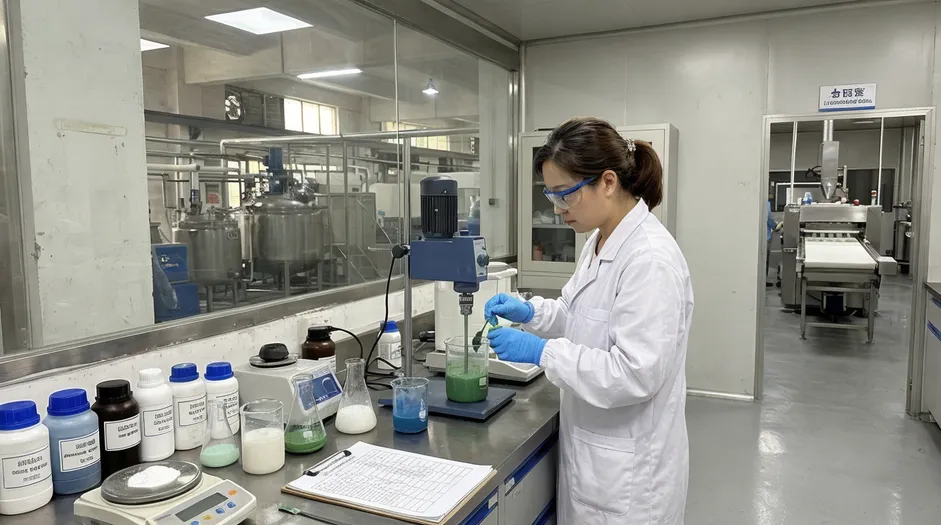
We run an in-house nitrile compounding lab adjacent to the production floor. Our formulation chemist has been with us since 2011 — the compound knowledge is in-house, not contracted out to a third party who also works for your competitors. When you bring us an OEM project, the development work happens here: adjusting acrylonitrile content for chemical resistance targets, tuning elongation-at-break for specific application requirements, developing accelerator-free compound for sensitization-sensitive markets, or matching a target color from a Pantone reference.
Why this matters
We've had OEM buyers come to us after switching from factories that couldn't hold their custom spec past the first sample shipment. The root cause is almost always that the factory was buying pre-mixed compound and had no control over batch-to-batch variation. We don't have that problem because we mix our own.
European Hospital Procurement
Accelerator-free formulation that passes EN 455 with no detectable thiuram or carbamate residue — a specification that opens tenders that standard nitrile can't enter.
Industrial Distribution — North America
Tuned compound for higher puncture resistance while staying within the thickness range your buyers expect.
These aren't special requests that require outsourcing — they're standard development work for our lab.
8
Automated dipping lines
±1°C
Bath temperature control
0.08–0.15mm
Thickness tolerance
Compound viscosity is monitored continuously. Once your formulation is locked, it runs the same way on line 3 as it does on line 7. Your customers shouldn't be able to tell which production run a box came from — that's the consistency that matters when you're building a brand.
Vague "full customization supported" claims don't help you plan a product. Here's what we can actually do, by dimension.
| Dimension | Customizable Range | Notes |
|---|---|---|
| Nitrile compound type | Standard, accelerator-free, high-acrylonitrile (chemical resistance) | Accelerator-free runs on dedicated line |
| Thickness | 0.08mm–0.15mm (palm measurement) | Tighter tolerances available on request |
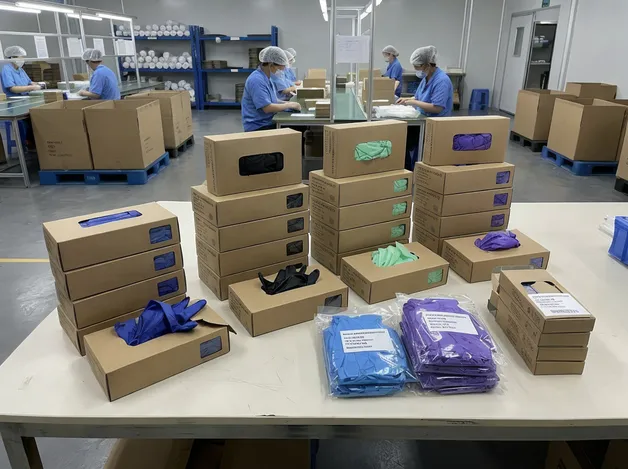
| Color | Blue, purple, black, white, green; Pantone matching available | Custom colors: MOQ applies per color |
| Elongation-at-break | Adjustable within EN 455 / ASTM D6319 compliance range | Requires sample approval round |
| Powder status | Powder-free standard; powdered available | Powder-free is our default and recommended |
| Dimension | Options |
|---|---|
| Texture | Smooth, textured fingertip, fully textured |
| Cuff style | Beaded cuff (standard), straight cuff on request |
| Chlorination | Available for improved donning on medical-grade SKUs |
| Dimension | Customizable Range |
|---|---|
| Box design | Full custom artwork (print-ready PDF/AI files required) |
| Box count | 50, 100, 200 per box — standard configurations |
| Carton labeling | Custom carton marks, barcode, Amazon FNSKU, distributor DC labels |
| Language | Any language on inner box and carton |
| Brand name | Your brand name, logo, and contact information |
We don't subcontract production to other factories for OEM orders. If a specification falls outside our production capability, we'll tell you directly rather than outsource it and lose control of the quality.
We also don't do latex or vinyl — if your product line requires those materials, we're not the right factory.
From your first inquiry to the container leaving our yard, here's how the process runs.
Send us your target specification: product type, thickness range, color, surface finish, packaging design, target market, and annual volume estimate. If you're starting ODM, we'll send you our current SKU catalog with spec sheets. If you're starting OEM, we'll review your requirements and confirm feasibility before moving to quotation.
What you provide
Spec sheet or reference sample, packaging artwork brief, target market (determines which certifications apply), volume forecast.
We send a detailed quotation covering unit price, tooling costs (if any), sample cost, and lead times. For ODM orders, samples are available from existing production stock. For OEM custom formulation projects, we prepare a development sample — this involves a lab mixing run and a small dipping trial on one line.
ODM Quotation
2–3 business days
OEM Custom Formulation
5–7 business days after requirements confirmed
We produce pre-production samples to your confirmed specification. Samples ship with a full test report covering the relevant standard (EN 455, ASTM D6319, or both). You test against your requirements, provide feedback, and we adjust if needed. Most OEM projects reach sample approval in one or two rounds — if a third round is needed, it's usually a packaging artwork revision, not a formulation issue.
ODM Samples
Ship within 5–7 business days
OEM Custom Formulation
3–5 weeks from confirmed spec, depending on formulation complexity
Once samples are approved and deposit received, your order enters the production schedule. We confirm your ship date at this stage. Our 8 lines and 1.2 billion pieces annual capacity mean standard container orders don't queue — your production slot is confirmed, not estimated.
Standard SKUs
25–35 days from order confirmation
Custom OEM Formulations
35–50 days, depending on order volume and line scheduling
Every production lot goes through 100% AQL 1.5 outgoing inspection. Online pinhole detection runs on every line during production — gloves that fail the electrical leak test are pulled before they reach packing. If your procurement process requires third-party pre-shipment inspection (SGS, Bureau Veritas), we coordinate directly with the inspection agency and provide access to the production lot.
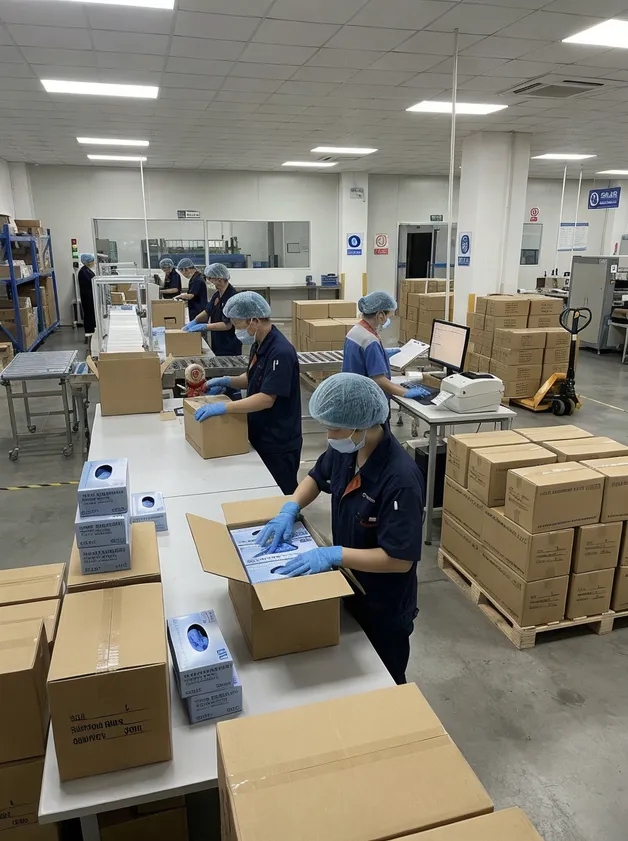
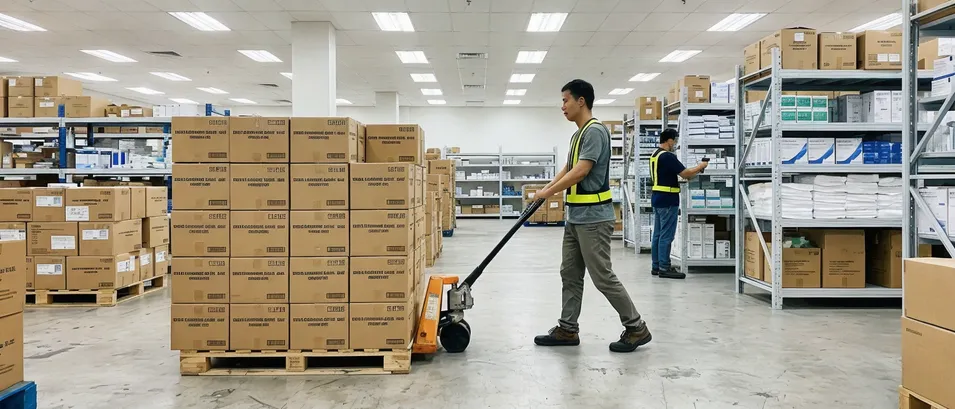
Finished goods are packed to your carton specification, palletized, and loaded into your nominated container. We prepare the full export documentation package: commercial invoice, packing list, certificate of origin, CE declaration of conformity, FDA 510(k) reference letter, and any additional compliance documents your import process requires.
Amazon FBA
For Amazon FBA shipments, we label to FNSKU requirements and prepare the shipment plan documentation.
Existing SKUs with your label. MOQ is 1 × 40HQ container — approximately 2,000 boxes for standard examination glove configurations.
The entry point for most new private-label programs. One container lets you test the market without overcommitting inventory.
MOQ is also 1 × 40HQ container per SKU. Below that threshold, development cost and line changeover don't make commercial sense for either side.
Building a multi-SKU line? Consolidated container loading across SKUs is possible once each formulation is approved.
These variables are flagged at the quotation stage so your timeline planning is accurate — no surprises after order confirmation.
New Packaging Artwork
Print plate production adds 7–10 days.
Peak Demand Periods
Accelerator-free compound orders during high-demand windows may extend scheduling.
Third-Party Pre-Shipment Inspection
Inspection scheduling adds 3–5 days.
OEM buyers are handing us their brand identity — packaging artwork, formulation specifications, sometimes proprietary product designs. We treat that seriously.
We sign NDAs before any technical discussion involving proprietary specifications or packaging designs. Your formulation, once developed, is not shared with other buyers or used in any other product.
Packaging artwork files are stored separately from our general production documentation and are not accessible to other customers. Your brand assets stay isolated.
Mold ownership for custom packaging components is documented in the purchase agreement. Standard practice: tooling paid for by the buyer belongs to the buyer. We maintain it in our facility for production use — ownership and exclusivity are yours.
We don't run your custom SKU for other customers. If a specification is developed under your OEM agreement, it doesn't appear in our ODM catalog. This is worth confirming in writing with any factory you work with — it's a standard clause in a well-structured OEM agreement.
Buyer guidance: Confirming no-parallel-production in writing is standard practice — not just with us, but with any factory partner. A well-structured OEM agreement should include this clause explicitly. Ask for it before signing.
When you put your brand on a glovemfg-manufactured glove, the underlying certifications come with it. Here's what's in place:
Quality management system certification covering the full production process.
European medical glove compliance; required for hospital and clinical procurement across the EU.
North American standard for nitrile examination gloves.
Required for medical device classification in the US market.
For OEM buyers, we provide a CE declaration of conformity that references your product under your brand name, and an FDA 510(k) reference letter for your import documentation.
If your target market requires additional certifications, discuss this at the requirements stage. Some require separate registration under your brand.
Discuss additional certification requirements at the project requirements stage.
Your quality documentation package is ready at shipment: test reports for the specific production lot, certificate of conformity, and any third-party inspection reports. You're not chasing paperwork after the container ships.
View Certifications & Quality AssuranceYour buyers are the end market — here's where private-label nitrile gloves generate repeatable volume.
Hospital groups, dental networks, and clinical supply distributors run annual procurement contracts. A private-label examination glove with EN 455 and accelerator-free certification positions you for tender participation rather than spot-market competition. Margins on branded medical consumables run significantly higher than on commodity resale.
MRO distributors and safety equipment wholesalers use private-label gloves as a margin-protection tool — your house brand can't be price-compared on a distributor's website. Industrial-grade nitrile (textured fingertip, higher puncture resistance) in your packaging is a catalog anchor product.
Food-contact compliant nitrile gloves are a standard consumable for food manufacturing and processing facilities. Blue or white powder-free gloves in bulk packaging (200-count boxes) are the standard configuration — a straightforward ODM program with predictable reorder cycles.
Public sector buyers in North America and Europe often require domestic-brand or private-label products for procurement compliance. FDA 510(k) and CE documentation under your brand name satisfies most institutional procurement requirements.
The accelerator-free segment has grown consistently since 2019 — European healthcare buyers are increasingly specifying it in tenders. If you're building a European medical distribution business, it's worth including at least one accelerator-free SKU in your initial program.
Most new OEM buyers start with a sample order to validate the spec before committing to a container. Tell us your target market, your volume expectations, and whether you're starting from our existing SKU catalog or bringing your own specification — we'll send back a quotation and a sample timeline within 2–3 business days.
If you're not sure which formulation fits your market, send us the details of what you're currently sourcing (or what your customers are asking for) and we'll recommend the configuration based on what's moving for our existing distributors in that region.