Factory-direct pink and color nitrile gloves — same certified nitrile, your choice of color.
Six color variants in stock rotation. Medical and industrial grades. OEM color matching from Pantone reference. CE, EN455, FDA 510(k) certified across the range.
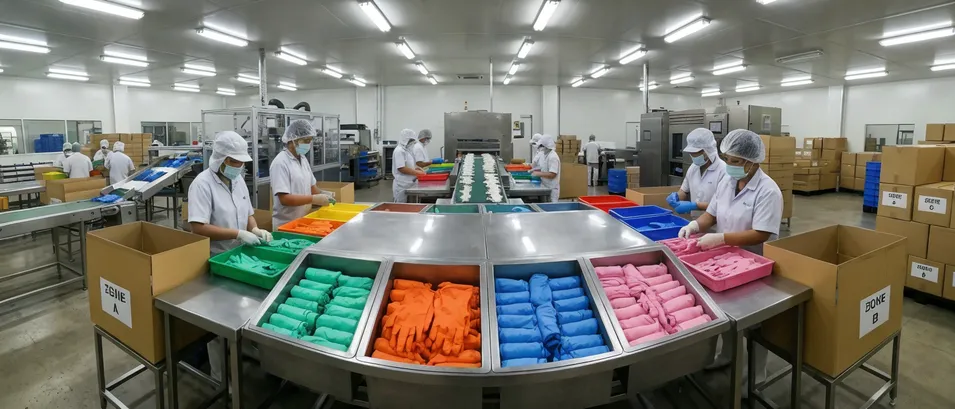
Pink nitrile gloves aren't a novelty SKU. In the markets where they move — dental, veterinary, aesthetics, food processing, and color-coded safety programs — color is a functional requirement, not a preference. A dental distributor supplying private practices needs pink or purple because their end customers have standardized on it. A food manufacturer running a color-coded contamination control program needs orange on one line and green on another. A beauty supply wholesaler needs a color that photographs well and matches their brand packaging.
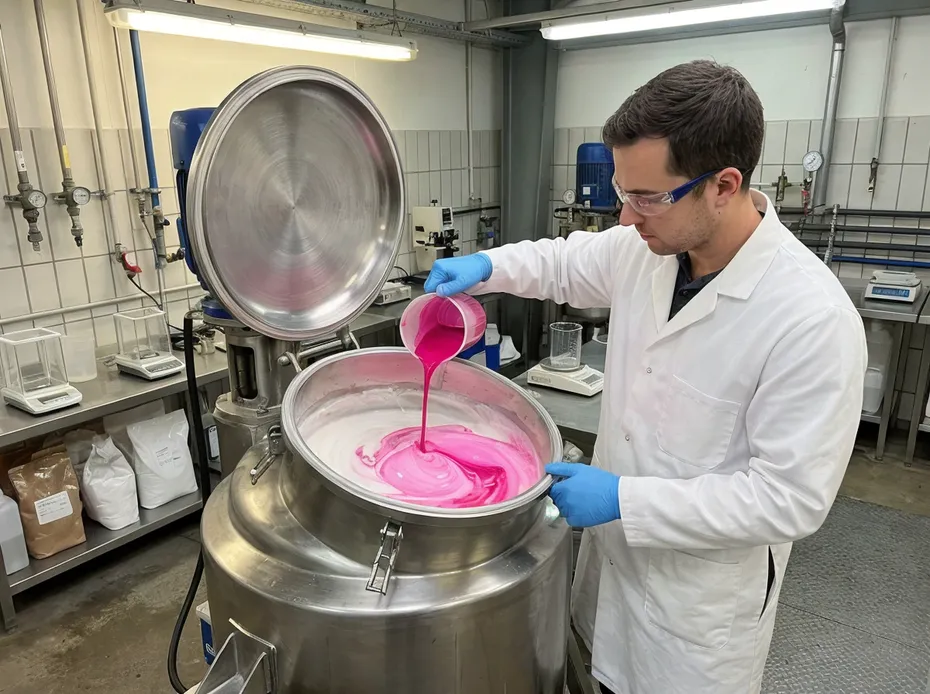
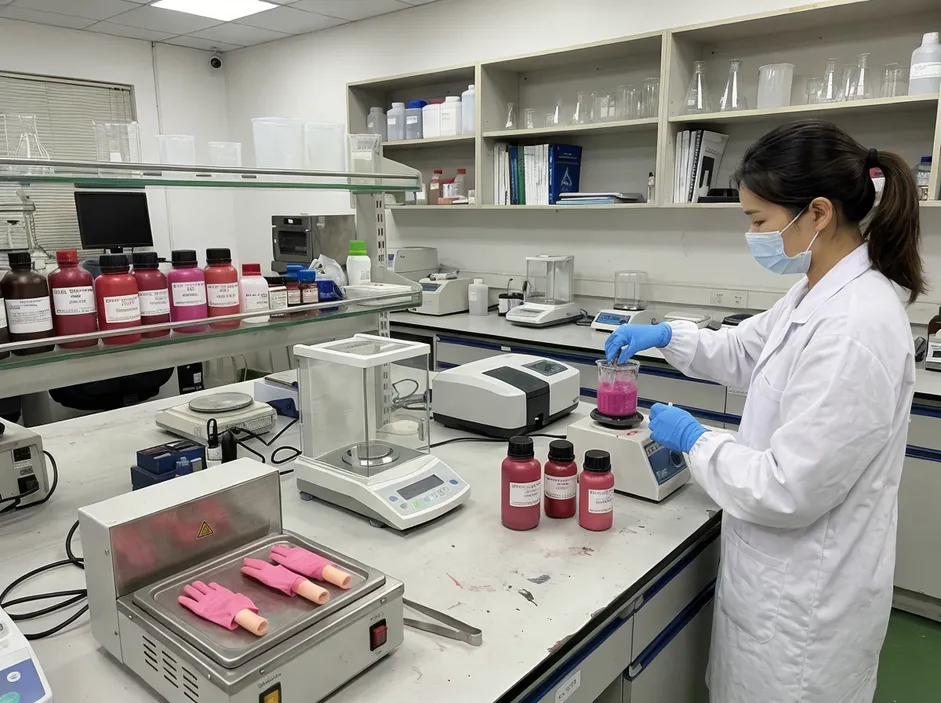
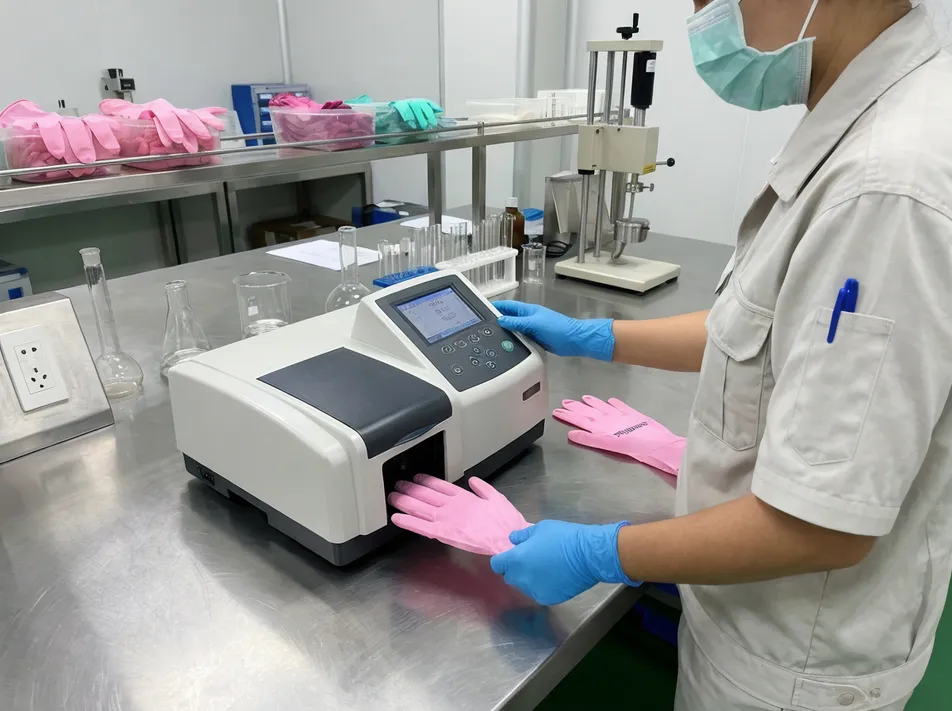
We've been producing color nitrile gloves since the demand for non-blue examination gloves started building in the European and North American markets. The color is introduced at the compounding stage — we add pigment to the nitrile compound in our in-house lab, not as a surface coating or post-dip treatment. That matters because surface-applied color can transfer to skin or product contact surfaces, which is a contamination and compliance problem. Compound-integrated pigment is stable through the dipping, curing, and stripping process, and it doesn't affect the glove's tensile strength or elongation-at-break performance.
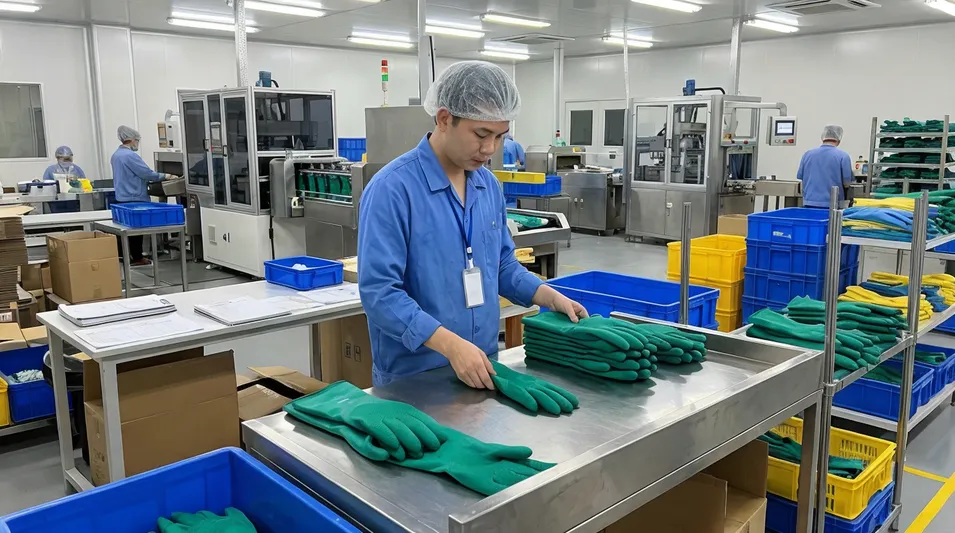
The same 0.08–0.15mm thickness tolerance we hold on standard blue and black nitrile applies to every color in this range. The AQL 1.5 outgoing inspection standard doesn't change because the glove is pink instead of blue. If you're sourcing color nitrile gloves for a market that requires EN455 or ASTM D6319 compliance, the certifications cover the color variants — we don't run a separate, lower-spec line for colored SKUs.
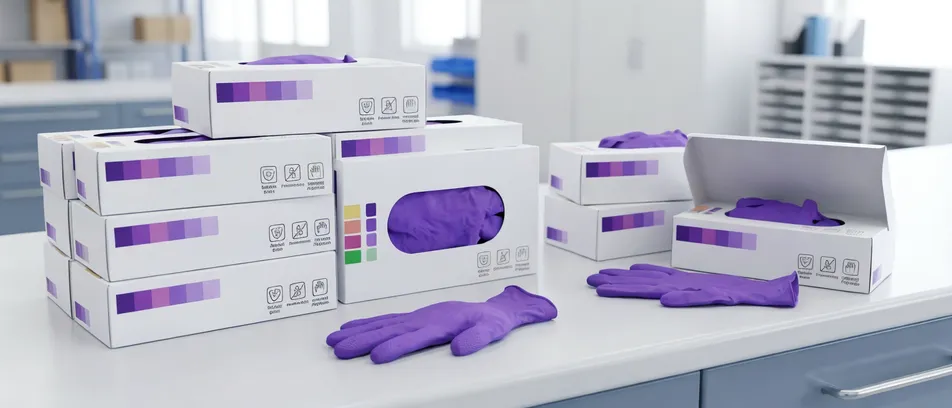
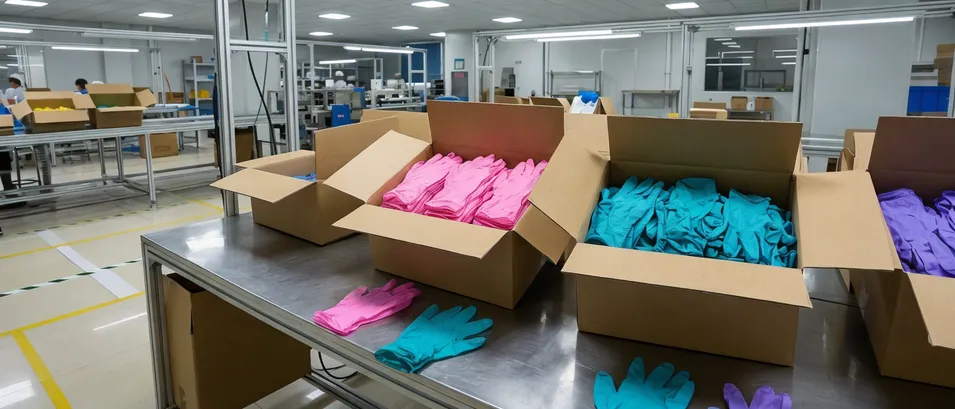
Six color variants, covering medical examination, food-contact, and industrial safety applications.
The highest-volume color in this range. Purple examination gloves are the default specification for a large segment of dental and veterinary distributors in North America and Europe — if you're building a distribution line for those markets, this is the SKU to start with. Available in medical and food-contact grades, powder-free, textured fingertip option available.
View Purple Nitrile Gloves
A cooler, blue-shifted purple — distinct enough from standard purple that buyers running multi-color coding systems use it as a separate tier. Aesthetics and nail salon supply distributors have been a consistent buyer segment for this color. Same compound, same AQL standard, same certification coverage as the rest of the range.
View Violet Nitrile Gloves
Medical-grade green examination gloves, used in surgical support, laboratory, and clinical settings where color differentiation from standard blue is required. Also moves well in food processing distribution — green is a common color-coding choice for produce and ready-to-eat food lines.
View Green Nitrile Gloves
Heavier gauge than the examination variant — 0.12–0.15mm range, designed for industrial safety programs where color coding by department or task is part of the safety protocol. Chemical processing, automotive assembly, and facilities management are the segments where this SKU gets specified.
View Green Industrial Gloves
High-visibility color for industrial environments. Orange is frequently specified in construction, utilities, and manufacturing safety programs where glove color needs to be visible at a distance or distinguishable from work surfaces. Industrial grade, heavier wall thickness, textured fingertip for grip in oily or wet conditions.
View Orange Industrial GlovesIf your program requires a color not listed above — pink, red, teal, yellow, or a custom Pantone match — this is the entry point for OEM color development. MOQ for custom color runs starts at one 40HQ container. We've matched colors from brand style guides, packaging references, and physical samples. Lead time for a new color development is typically 3–4 weeks from approved Pantone reference to production sample.
Most nitrile glove factories buy pre-mixed compound from a third-party supplier and add pigment at the dipping stage. The problem with that approach is that compound viscosity, cure temperature, and pigment concentration interact — if any one of those variables shifts between batches, the color shifts too. You end up with a container of purple gloves where the first 500 boxes are a slightly different shade than the last 500. For a distributor supplying a dental chain that has standardized on a specific purple, that's a customer complaint waiting to happen.
We mix our own nitrile compound in-house. The compounding lab controls viscosity, acrylonitrile content, cure chemistry, and pigment concentration as a single system. When we lock a color formulation, we record the full compound specification — pigment loading percentage, dispersion method, cure profile — and that record is what we pull for every subsequent production run of that SKU.
We've been running some color formulations for six or seven years without a shade complaint. That's not luck — it's having the compound spec locked and the lab discipline to follow it.
For OEM buyers building a private-label color program, this means we can develop a formulation to your Pantone reference, produce a physical production sample for your approval, and then hold that exact color across your full year of orders. The color consistency your downstream customers see on the shelf in Q4 matches what they saw in Q1.
Compound Formulation & Initial Dip Test
Internal — pigment loading, dispersion method, and cure profile locked to your Pantone reference.
Production Sample Run
Physical samples submitted for your approval before any full production run begins.
Locked Production Spec
Full production only after your sign-off. The approved spec is pulled for every subsequent reorder.
That approval step protects both sides — you're not discovering a color mismatch when the container arrives.
Full certification documentation available on request — CE declaration of conformity, FDA 510(k) reference number, and internal test reports for the specific production lot.
CE · EN455 · FDA 510(k) · ASTM D6319
ISO 9001:2015 · ASTM D6319
ISO 9001:2015
Quality Management
CE · EN455
Medical Grade (EU)
FDA 510(k)
Medical Device (US)
ASTM D6319
Nitrile Exam Gloves
Accelerator-free option: If you're supplying European dental or hospital groups, Type IV allergy compliance is increasingly a procurement requirement in that segment. We run accelerator-free compound on a dedicated line — available across both medical and industrial grades.
Color nitrile gloves command a price premium over standard blue in most distribution channels — typically 8–15% above commodity blue nitrile at the same specification level. That premium exists because color is a differentiation signal, not just a functional choice.
Purple and violet examination gloves are the default specification for a large portion of dental practices in North America and Europe. Distributors supplying dental chains or buying groups can lock in repeat orders at above-commodity pricing because the color is part of the practice's standardized supply list. Switching costs are real — once a practice has standardized on purple, they're not switching to blue to save a few cents per box.
Pink, violet, and teal nitrile gloves are standard inventory for distributors supplying nail salons, tattoo studios, and beauty schools. This segment buys on color and brand presentation as much as on specification — a well-packaged color glove with consistent shade sells at a meaningful premium over generic blue. Private-label programs work particularly well here because the end customer is buying the brand, not the commodity.
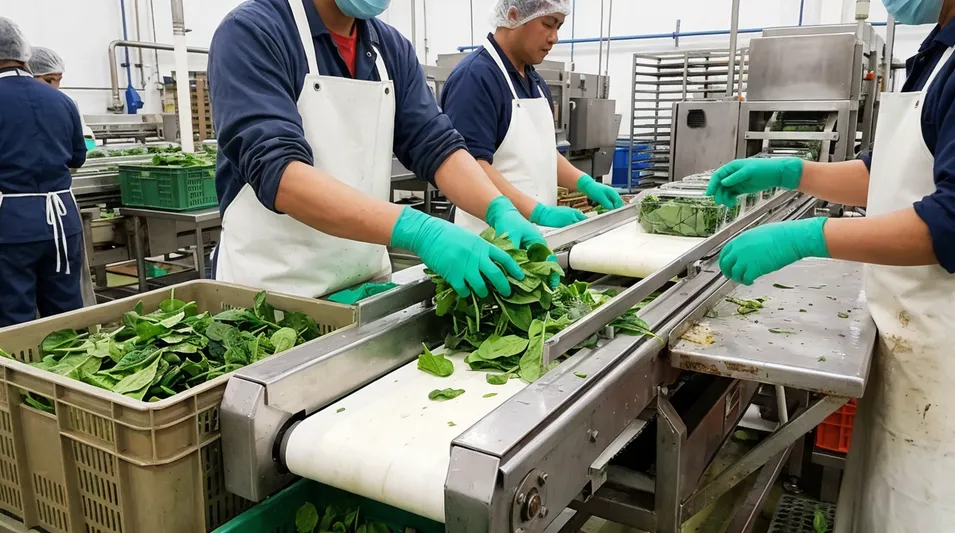
Color-coded glove programs are a HACCP compliance tool in food manufacturing — different colors for different zones or tasks, so cross-contamination is visually detectable. Food safety distributors supplying processors, catering operations, and institutional kitchens specify green, orange, and blue as a system. Selling a color system rather than individual SKUs increases your average order value and makes you harder to replace.
Orange and high-visibility colors are specified in construction, utilities, and manufacturing environments where glove visibility is part of the safety protocol. Safety distributors and industrial supply companies that can offer color-coded programs — rather than just commodity blue — position themselves as program partners rather than commodity suppliers.
Tell us your target market and we'll recommend the right color SKU mix.
Request Color SKU RecommendationThe most common complaint we hear from buyers who've switched to us from other color nitrile suppliers isn't about thickness or AQL — it's about color drift between orders.
They placed an initial order, the color was right, and then the reorder came in noticeably different. Their downstream customers noticed. Some returned product.
If the factory is buying pigment from multiple suppliers or doesn't have a locked pigment specification, the color shifts when the pigment lot changes.
If the nitrile compound isn't mixed in-house to a locked spec, viscosity changes affect how the pigment disperses through the compound — which changes the final color even if the pigment itself is consistent.
The purple gloves in your Q3 container match the purple gloves your customer approved in Q1. That consistency is what keeps your downstream customers from raising color complaints — and what keeps your account from getting reviewed at the next procurement cycle.
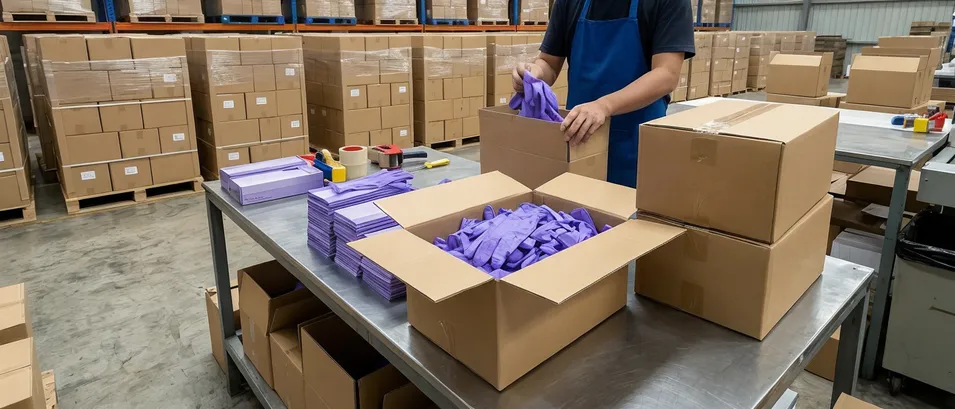
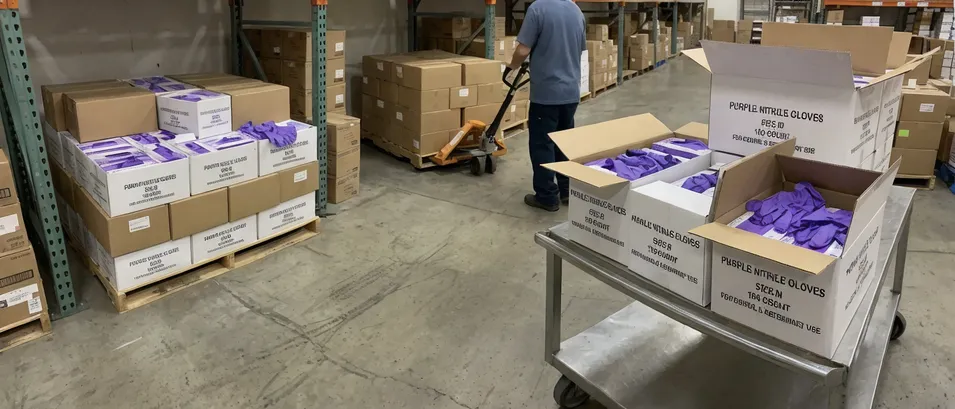
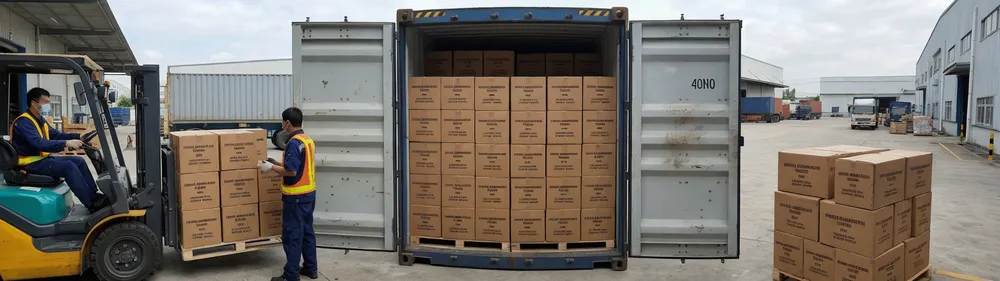
Standard packing for examination-grade color nitrile: 100 gloves per box, 10 boxes per carton. Carton dimensions are optimized for 40HQ loading — a properly loaded 40HQ carries approximately 2,000 cartons (200,000 boxes, 20 million gloves) for standard examination glove SKUs. Industrial-grade SKUs with heavier wall thickness pack at slightly lower density due to carton weight limits.
Standard examination-grade pack count per inner box.
Master carton configuration optimized for 40HQ container loading.
200,000 boxes — 20 million gloves — per full container, examination grade.
From order confirmation for standard color SKUs. Repeat orders on locked specs ship without reformulation delay.
The color choice and grade specification are two separate decisions, and getting both right matters for your margin and your compliance exposure.
If you're entering a market where a specific color is already the category standard (purple for dental, for example), match it — don't try to differentiate on color in a market that has already standardized.
If you're building a color-coded program for a food or industrial customer, choose colors with maximum visual contrast to each other and to the work environment.
Orange and green are the most common pairing for two-color industrial programs because they're visually distinct under most lighting conditions.
Medical-grade (EN455, ASTM D6319, FDA 510(k)) is required for examination and clinical use, and it's also the specification that opens hospital, dental, and veterinary procurement.
If your distribution channel touches any regulated healthcare procurement, specify medical grade — the price difference over industrial grade is small, and the compliance exposure of supplying non-medical-grade gloves into a medical application is not.
Industrial grade is appropriate for food processing, manufacturing, and general safety programs where medical certification isn't required.
Standard examination grade (0.08–0.10mm palm) is the right spec for high-volume medical and food-contact applications where tactile sensitivity matters.
Industrial grade (0.10–0.15mm) is appropriate for chemical handling, mechanical work, and environments where puncture resistance is more important than dexterity.
Buyers who use examination-grade gloves in light industrial applications to save cost find it works until someone puts a glove through a sharp edge and files a safety incident. Specify the right gauge for the application.
Use this matrix to confirm the right specification before placing your order.
| Application | Grade | Thickness |
|---|---|---|
| Medical / Dental / Veterinary | Medical | 0.08–0.10mm |
| Food Processing | Medical | 0.08–0.10mm |
| Chemical Handling | Industrial | 0.10–0.15mm |
| Mechanical / Manufacturing | Industrial | 0.10–0.15mm |
| General Safety Programs | Industrial | 0.10–0.15mm |
For standard color SKUs in our production rotation (purple, violet, green, orange), MOQ is one 40HQ container — approximately 2,000 boxes for examination-grade gloves. For custom color development (new Pantone match, private-label formulation), MOQ is also one 40HQ container, which covers the formulation development and gives you a viable opening inventory position. Sample orders are available before full container commitment; samples ship within 5–7 business days.
We control color at the compound level, not the surface level. Pigment is sourced from a single approved supplier per color with incoming batch testing against our color standard. Compound is mixed in-house to a locked viscosity specification. Every production run is checked against a physical color standard using spectrophotometer measurement before the run is approved. The locked compound spec is what we pull for every reorder — there's no reformulation between orders unless you request a change.
Yes. The certifications — CE, EN455, ASTM D6319, FDA 510(k) — cover the color variants in this range. We don't run a separate lower-spec line for colored SKUs. The same AQL 1.5 outgoing inspection standard applies. Full certification documentation (CE declaration of conformity, FDA 510(k) reference, internal test reports) is available for each production lot.
Two main causes: UV exposure and improper storage temperature. Nitrile gloves should be stored away from direct sunlight and fluorescent UV sources — UV degrades the pigment and the nitrile compound simultaneously, accelerating both color fade and physical degradation. Storage temperature above 30°C accelerates compound aging. Standard recommendation is storage below 25°C, away from UV sources, in original sealed cartons. Shelf life under proper storage conditions is 5 years from manufacture date. (We print manufacture date and expiry date on every carton — if a supplier doesn't, that's worth asking about.)
Yes. Provide a Pantone reference number or a physical sample, and our compounding lab will develop a formulation to match. We submit a production sample for your approval before locking the spec and moving to full production. Lead time from Pantone reference to approved production sample is typically 3–4 weeks. MOQ for custom color development is one 40HQ container.
In dental distribution, purple is the dominant color — it's what most dental practices in North America and Europe have standardized on, and it's what most dental supply distributors stock as their primary examination glove color. Pink is a secondary color in that channel, used by practices that want differentiation from the standard purple or that have brand-specific color requirements. If you're entering dental distribution without an existing customer color preference, purple is the lower-risk starting SKU because it matches the existing market standard. If you're building a private-label line for a dental brand with specific color requirements, we can match either.
If you're building a distribution line in dental, veterinary, aesthetics, food processing, or industrial safety — and you need a color nitrile supplier who can hold spec and color consistency across a full year of orders — send us your target market, volume expectations, and any color references you're working from.
We'll recommend the right SKU configuration, confirm certification coverage for your target market, and get samples to you within a week.