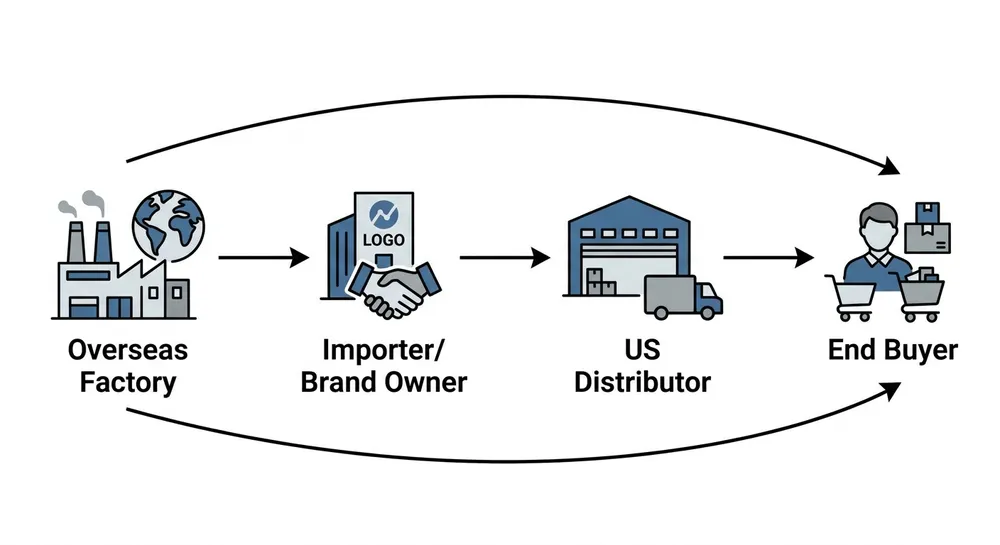
The US nitrile glove market runs on a layered supply chain. Most buyers sourcing at volume — whether for distribution, healthcare procurement, or industrial safety programs — are working through domestic distributors who themselves import from overseas factories. That's not a criticism; it's just how the market is structured. Understanding that structure is the first step to knowing where your pricing comes from and where you have room to negotiate.
This shortlist covers 10 real suppliers active in the US market. Some are domestic distributors with deep inventory. Some are specialty importers. One is a factory-direct manufacturer. The goal isn't to crown a winner — it's to give you a clear picture of what each supplier model offers, what it costs you in margin, and when each route makes commercial sense.
How to Read This List: Supplier Models, Not Just Names
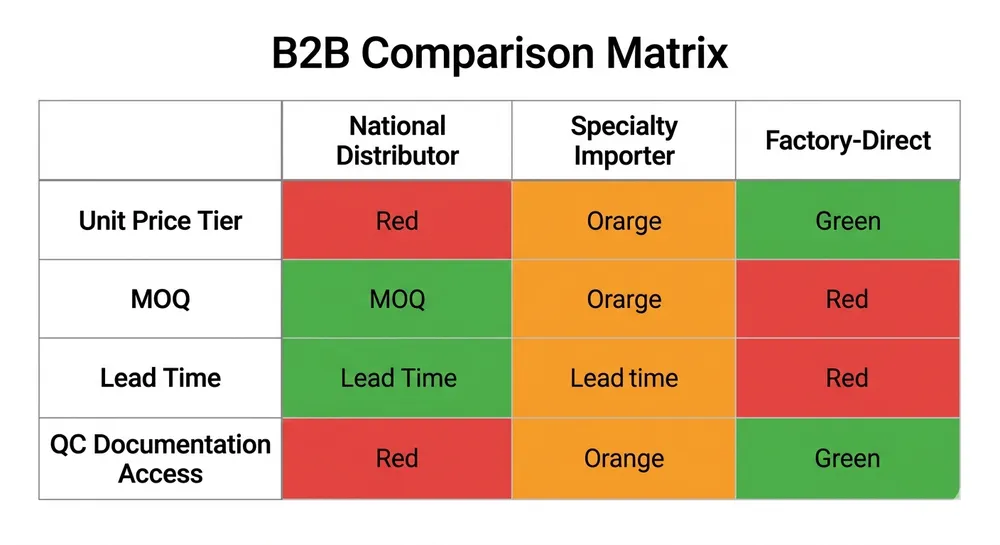
Before the names, the framework. US nitrile glove suppliers fall into three functional models, and the model matters more than the brand for your sourcing decision:
Model 1 — National Distributors with Warehouse Stock Large SKU depth, fast replenishment, credit terms, and sales reps. You pay a distribution margin (typically 15–30% above importer cost) for that convenience. Right for urgent fills, small orders, and accounts where delivery speed is non-negotiable.
Model 2 — Specialty Importers and Brand Owners These companies own a brand, import container quantities from overseas factories, and sell to distributors or direct to large end-users. Pricing is tighter than national distributors. MOQ is higher — usually full pallet or container. Quality consistency depends entirely on how well they manage their factory relationships.
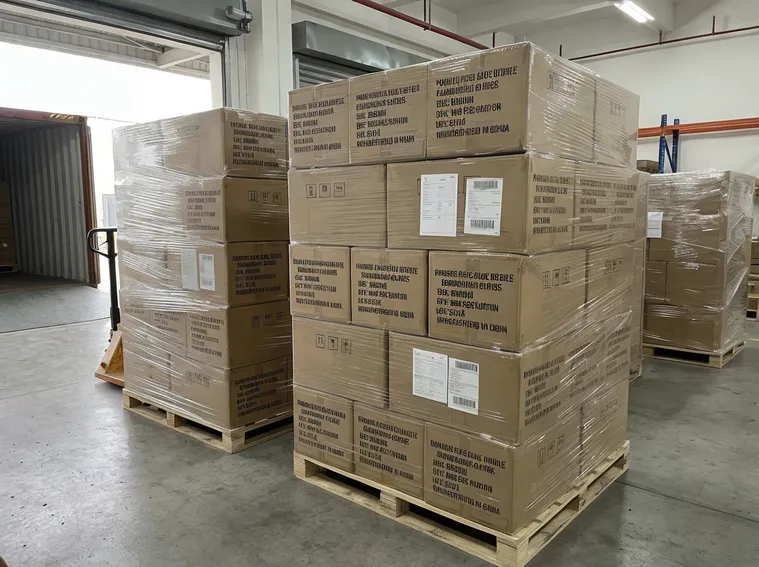
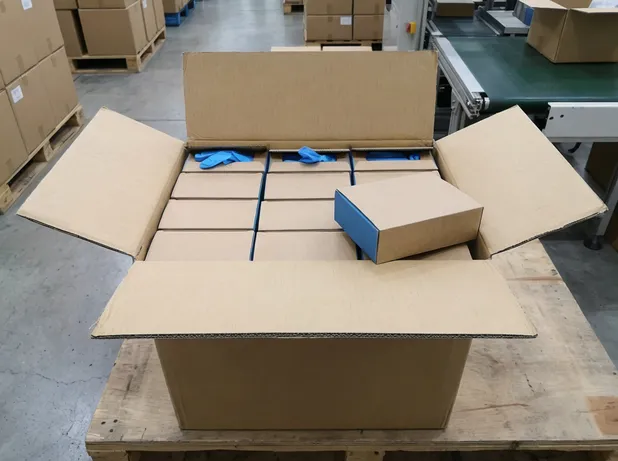
Model 3 — Factory-Direct Import You source directly from the manufacturing facility. No distribution margin. Full visibility into production specs, QC protocols, and certification documentation. MOQ is typically one container (~2,000 boxes for standard nitrile). Lead time is longer than pulling from domestic stock, but landed cost is structurally lower at repeat volume.
Most buyers use a mix of all three depending on order size and urgency. The question is whether your current volume justifies moving more spend toward Model 2 or 3.
The 10 Suppliers: What They Are and What They're Good For
1. Ansell Healthcare — ansell.com
Ansell is one of the largest PPE manufacturers globally, with a significant US distribution presence. Their nitrile glove range covers medical, industrial, and chemical-resistant grades under brands including HyFlex and TouchNTuff. For US buyers, Ansell typically operates through authorized distributors rather than direct-to-buyer sales at standard volumes. Strength: brand recognition and broad certification coverage. Trade-off: pricing reflects brand premium; direct factory access is not available to most buyers.
2. Kimberly-Clark Professional — kcprofessional.com
Kimberly-Clark's professional division supplies nitrile gloves under the Kleenguard brand, primarily targeting industrial and manufacturing safety programs. Distribution runs through safety supply chains including Grainger and Fastenal. Strength: consistent product quality and wide availability through established safety distributors. Trade-off: positioned as a branded safety product, not a commodity nitrile — pricing reflects that positioning.
3. Medline Industries — medline.com
Medline is one of the largest US-based medical supply distributors, with a substantial private-label nitrile glove program. They import at scale and supply healthcare systems, surgery centers, and large institutional buyers. Strength: deep inventory, healthcare-grade documentation, and established GPO relationships. Trade-off: primarily serves healthcare institutional accounts; less accessible for industrial or food-service distributors outside that channel.
4. Cardinal Health — cardinalhealth.com
Cardinal Health operates one of the largest medical product distribution networks in the US. Their nitrile glove portfolio includes both branded and private-label options, with strong penetration into hospital systems and long-term care facilities. Strength: supply chain reliability and healthcare compliance infrastructure. Trade-off: channel-specific — if you're not selling into healthcare, their pricing and MOQ structure may not fit your business model.
5. Grainger — grainger.com
Grainger is the dominant US industrial MRO distributor, carrying nitrile gloves from multiple brands including Ansell, Kimberly-Clark, and their own Condor private label. For industrial safety buyers, Grainger's value is breadth and speed — next-day delivery on most SKUs, credit accounts, and a procurement platform that integrates with most ERP systems. Strength: unmatched availability and procurement convenience for industrial accounts. Trade-off: you are paying full distribution margin on every order; there is no path to factory-level pricing through this channel.

6. Fastenal — fastenal.com
Fastenal's safety supply division carries nitrile gloves as part of a broader PPE catalog, with local branch inventory across thousands of US locations. Their vending machine program (FAST Solutions) is popular with manufacturing facilities managing high-frequency glove consumption. Strength: local availability and managed inventory programs for industrial accounts. Trade-off: SKU depth on nitrile is narrower than specialty distributors; pricing is convenience-driven.
7. Protective Industrial Products (PIP) — pipusa.com
PIP is a specialty safety products importer and brand owner with a dedicated nitrile glove line. They import at volume and sell through safety distributors across North America. Their G-Tek and MaxiFlex lines are well-known in the industrial safety channel. Strength: specialty importer with tighter pricing than national distributors and reasonable SKU depth across industrial nitrile grades. Trade-off: primarily industrial-focused; medical-grade documentation coverage is limited compared to healthcare-channel suppliers.
8. Ammex Corporation — ammex.com
Ammex is a US-based nitrile and vinyl glove importer that sells direct to distributors, food service operators, and industrial buyers. They maintain domestic warehouse inventory and offer private-label programs. Strength: accessible MOQ for mid-size distributors, domestic stock availability, and a straightforward private-label path. Trade-off: as an importer rather than a manufacturer, their ability to customize formulation, thickness, or certification documentation is limited to what their overseas suppliers support.
9. Uline — uline.com
Uline is a major US packaging and industrial supply distributor with a broad nitrile glove catalog. They stock multiple grades and sizes with same-day shipping from regional distribution centers. Strength: speed and convenience — Uline's logistics infrastructure is genuinely fast, and their catalog covers standard nitrile SKUs reliably. Trade-off: pricing is retail-adjacent for a distributor; buyers sourcing at pallet or container scale will find better economics elsewhere.
10. Glovemfg — glovemfg.com
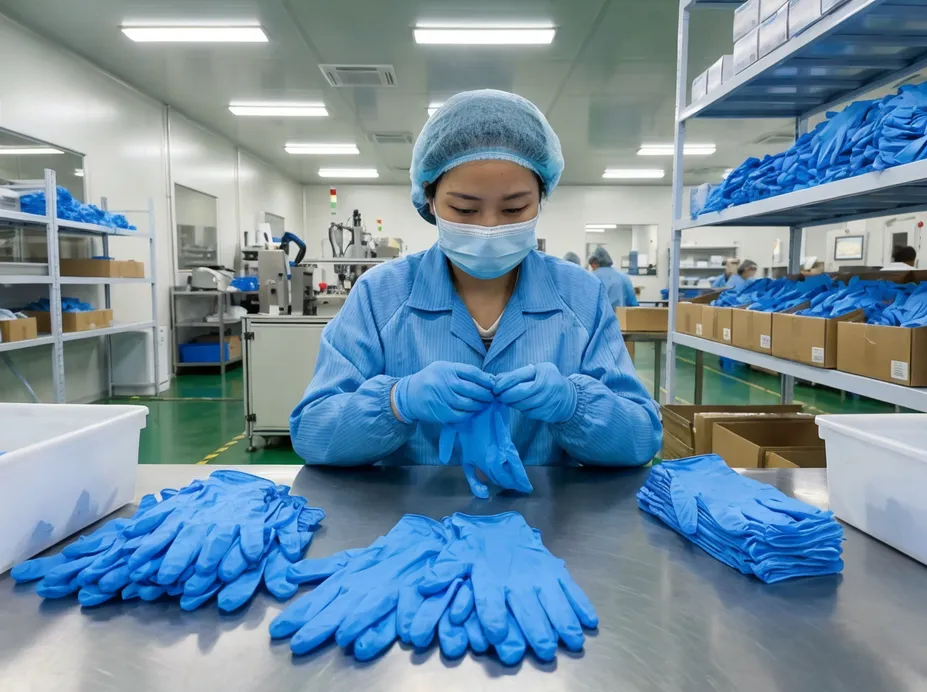
Qingdao Glovemfg Medical Products Co., Ltd. is a factory-direct nitrile glove manufacturer, not a US distributor. We manufacture powder-free nitrile gloves across medical, industrial, and food-contact grades from an 18,000 m² facility in Qingdao, Shandong, running 8 fully automated dipping lines at 1.2 billion pieces annual capacity. FDA 510(k), ASTM D6319, ISO 9001:2015, CE, and EN 455 certifications are held at the factory level — not sourced through a third-party brand.
The reason this belongs on a US supplier shortlist: for buyers sourcing at container scale on a repeat basis, the economics of factory-direct import are structurally different from anything above. You're not paying a distribution margin, an importer margin, or a brand premium. You're paying factory cost plus freight plus your own margin. (We've been doing this since 2007 — the compliance documentation, pre-shipment inspection protocols, and AQL 1.5 inline QC are built into the production process, not added as an afterthought for export.)
What Separates a Reliable Supplier from a Convenient One
Availability is not the same as reliability. Every distributor on this list can ship you gloves this week. The question is what happens when you need 50,000 boxes on a consistent spec across three consecutive quarters.
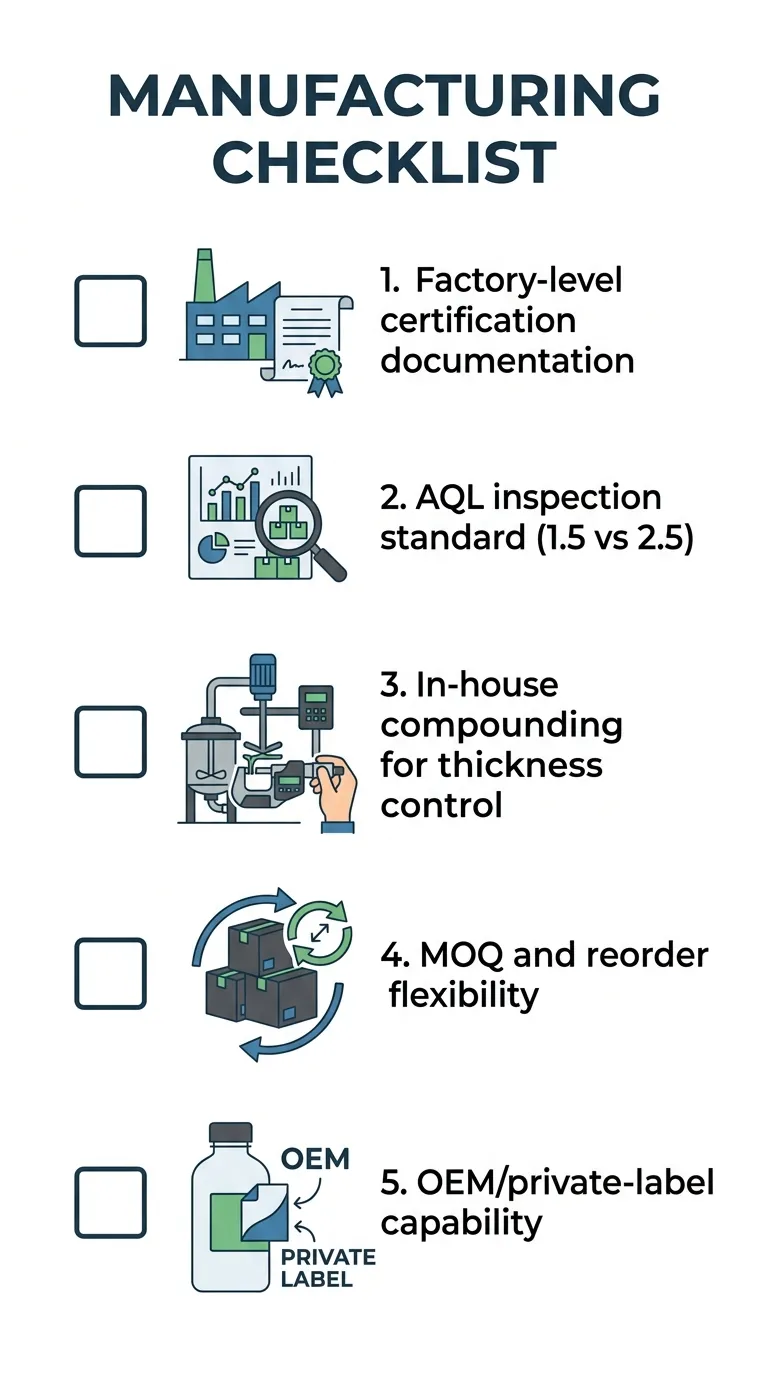
Here are the criteria that actually matter at sourcing scale:
Certification documentation at the factory level ASTM D6319 and FDA 510(k) clearance should be held by the manufacturer, not just referenced by the distributor. When a US Customs examiner pulls your container, the documentation trail goes back to the factory. A distributor's marketing sheet doesn't satisfy that inquiry. Ask for the actual 510(k) number and the ASTM test report from the manufacturing facility — not a summary document from the importer.
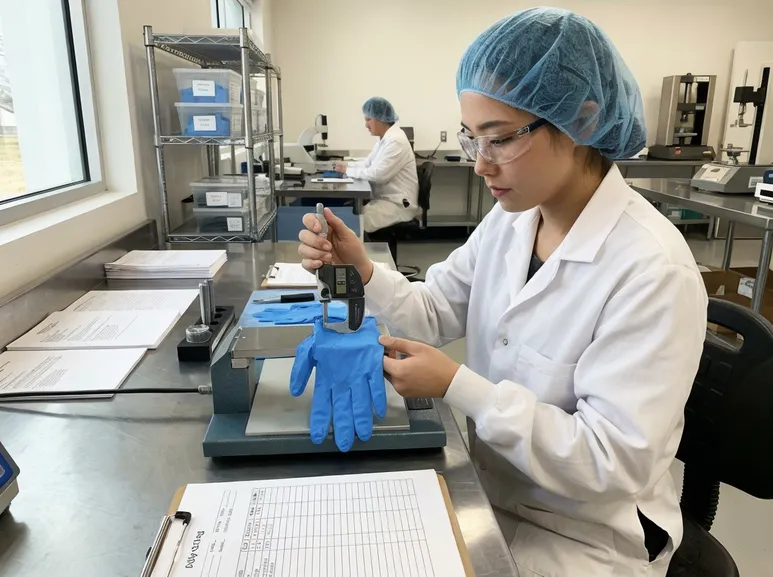
AQL inspection standard and inline QC AQL 1.5 is the standard for medical-grade nitrile. Some industrial-grade suppliers run AQL 2.5 or higher, which means a statistically higher defect rate per shipment. Know which standard your supplier runs and whether it's enforced inline during production or only at final inspection. Inline detection — particularly pinhole detection systems on the dipping line — catches defects before they're packed, not after they're loaded.
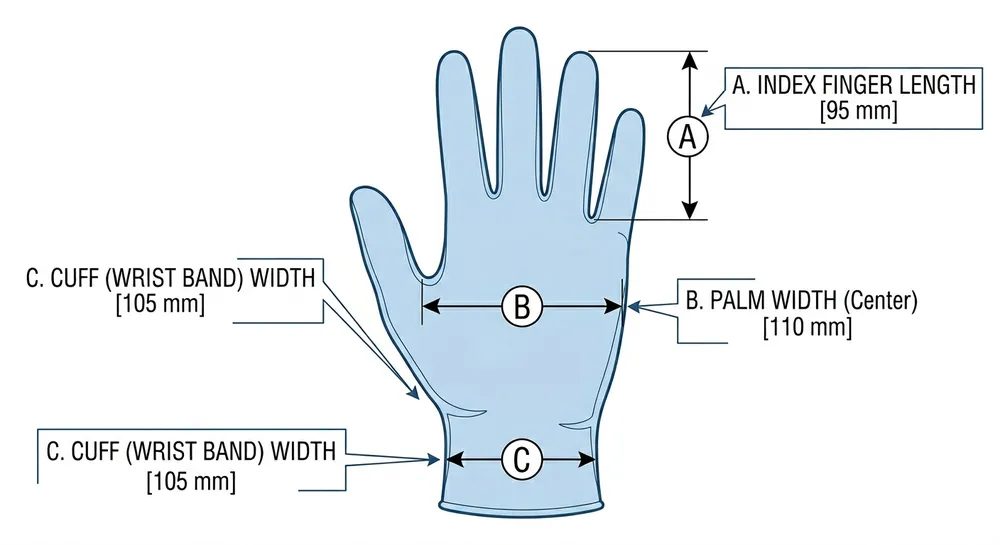
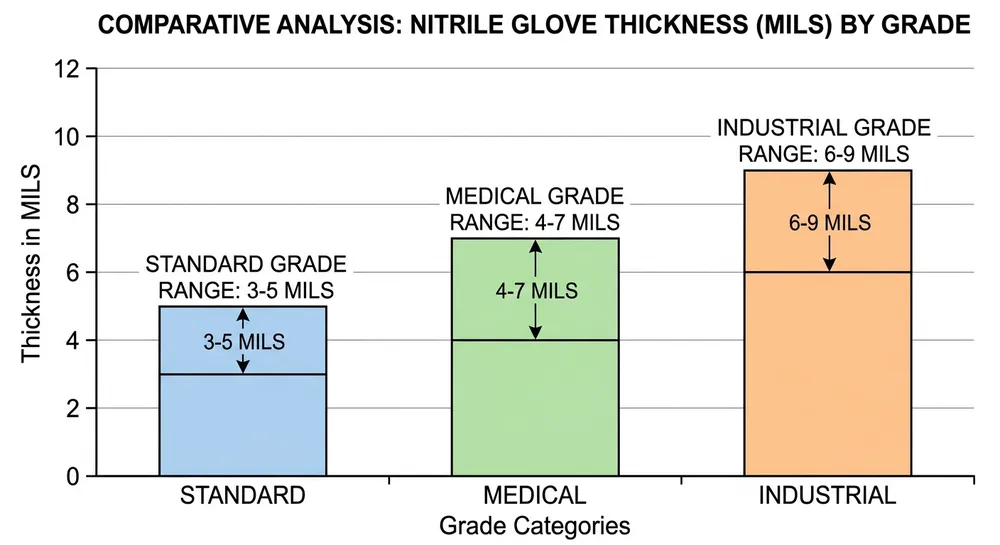
Thickness consistency across the batch A glove that measures 0.10mm at the palm and 0.07mm at the fingertip is a QC failure waiting to happen at the port. Thickness variation is the most common cause of ASTM test failures on imported nitrile. The only way to control it is through in-house compounding — owning the nitrile formulation rather than buying pre-mixed compound from a third party. Ask your supplier whether they compound in-house or purchase compound externally. The answer tells you how much control they actually have over the finished spec.
MOQ and reorder flexibility National distributors have no MOQ — that's their value proposition. Factory-direct suppliers typically start at one container (~2,000 boxes for standard nitrile). The right MOQ depends on your order cadence. If you're placing monthly orders of 500 boxes, a distributor makes sense. If you're placing quarterly orders of 5,000+ boxes, the container economics start working in your favor.
Private-label and OEM capability If you're building a branded safety supply line, the ability to run your own label from the same factory that holds the certifications matters. Some importers offer private-label programs, but the factory behind them may change without notice. Factory-direct OEM means your brand, your spec, your certification documentation — all traceable to one production facility.
The Convenience Cost: What You're Actually Paying For
Domestic distributor pricing on standard powder-free nitrile typically runs 20–40% above factory-direct landed cost at container volume, depending on grade, thickness, and current market conditions. That spread is not profit padding — it's the cost of warehousing, logistics infrastructure, credit terms, and the ability to ship you 200 boxes on Tuesday.
That's a legitimate trade-off. The question is whether you're paying the convenience premium on every order, including the ones where you don't need Tuesday delivery.
Most buyers we work with run a hybrid model: domestic distributor for urgent fills and small orders, factory-direct import for planned quarterly volume. The domestic stock covers the gaps; the container orders protect the margin. (This is worth modeling explicitly — take your last 12 months of glove spend, separate urgent fills from planned orders, and price the planned portion at factory-direct landed cost. The number is usually surprising.)
Where the convenience cost becomes a sourcing problem is when it compounds across the supply chain. A distributor buying from an importer buying from a factory means three margin layers between you and the production cost. At commodity nitrile prices, that compression is real. If your downstream customers are price-sensitive — and in industrial safety and food service, they usually are — that margin stack limits how competitively you can price.
When Local Supply Is the Right Answer
Factory-direct import is not always the smarter choice. Be clear-eyed about when domestic supply wins:
- Urgent small orders: You need 300 boxes by Friday. No container program covers that. A distributor does.
- Unpredictable demand: If your volume swings significantly quarter to quarter, carrying container-scale inventory risk doesn't make sense until your demand baseline stabilizes.
- Compliance timing: If you're entering a new market segment and need to verify certification requirements before committing to a spec, buying domestically while you sort out the compliance picture is reasonable.
- Trial orders before switching: Before moving volume to any new supplier — including factory-direct — run a trial order. Verify the spec, the documentation, and the delivery reliability before you commit your quarterly volume.
The distributors on this list are good at what they do. Grainger's logistics infrastructure is genuinely impressive. Medline's healthcare compliance documentation is thorough. Cardinal Health's supply chain reliability in the hospital channel is real. None of that is in dispute. The question is whether those strengths are worth the price premium for your specific order profile.
Factory-Direct Import: The Economics at Container Scale
At one container of standard powder-free nitrile (approximately 2,000 boxes of 100 gloves), the landed cost math changes materially. Factory ex-works price plus ocean freight plus US customs duty (currently 0% for most nitrile glove HS codes from qualified suppliers) plus port handling typically lands 25–35% below equivalent domestic distributor pricing on the same spec.
That spread widens on higher-value SKUs — accelerator-free nitrile, textured fingertip variants, and thicker industrial grades carry higher distributor margins because they're specialty items with less price transparency. Factory-direct pricing on these SKUs is often 35–45% below domestic distributor cost.
The certification picture at factory-direct level is also cleaner than most buyers expect. Our FDA 510(k) clearance, ASTM D6319 test reports, and ISO 9001:2015 certification are held at the factory and available for review before you place an order — not after the container ships. Pre-shipment inspection under AQL 1.5 with inline pinhole detection is standard on every production run, not an add-on service.
For buyers building a disposable nitrile gloves program at scale — whether for distribution, private-label, or institutional supply — the factory-direct route removes two margin layers and gives you direct access to the production spec. That's a different sourcing relationship than buying from a distributor's catalog.
Sourcing Route Decision Guide
Use this framework to match your order profile to the right supplier model:
| Scenario | Recommended Route |
|---|---|
| Urgent fill, under 500 boxes, needed within the week | Domestic distributor (Grainger, Uline, Fastenal) |
| Planned quarterly volume, 2,000+ boxes, standard spec | Factory-direct import |
| Healthcare institutional account, GPO compliance required | Medline or Cardinal Health |
| Industrial safety program, branded product preferred | PIP, Kimberly-Clark, or Ansell through distributor |
| Private-label or OEM program, 1 container minimum | Factory-direct manufacturer |
| Mixed demand — urgent fills plus planned volume | Hybrid: distributor for fills, factory-direct for base volume |
The buyers who get the best economics are usually the ones running the hybrid model deliberately — not defaulting to one channel for everything, but routing each order type to the supplier model that fits it.
If your planned volume is at or above one container per quarter and you haven't modeled factory-direct landed cost against your current distributor pricing, that's the analysis worth running before your next renewal. Send your current spec — grade, thickness, size mix, and annual volume — to Request Quote and we'll put together a landed cost comparison against your current pricing.