Pink and Colored Nitrile Gloves Sourcing Guide: Color Consistency, MOQ, and Custom Color Options for Distributors
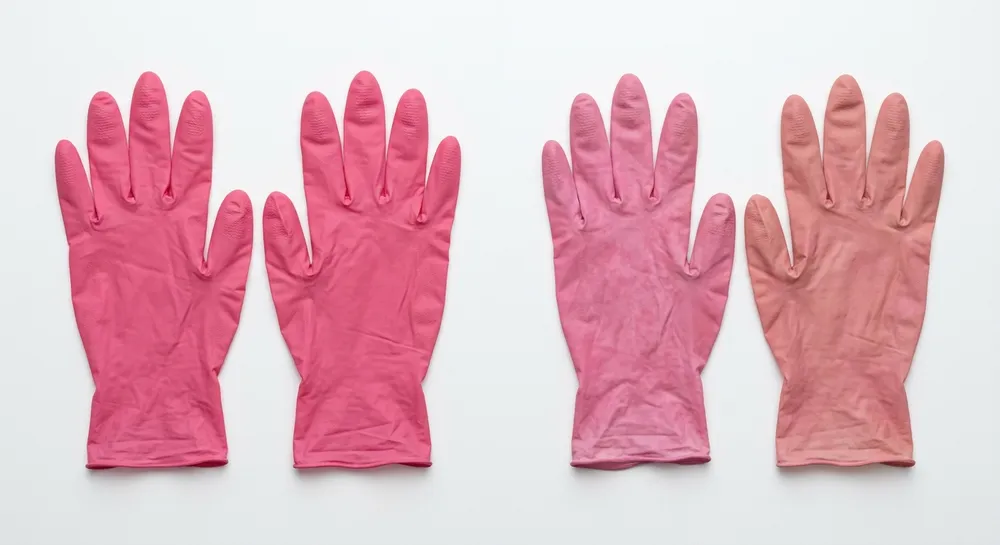
Most color problems in nitrile gloves don't show up on the first container. They show up on the third — when your customer calls to say the pink gloves they reordered look noticeably different from the ones they've been selling for six months. By then you've already invoiced, and the explanation you owe your buyer is an uncomfortable one.
Color in nitrile gloves is a formulation variable, not a surface treatment. That distinction matters more than most distributors realize when they're evaluating suppliers.
Why color consistency is a formulation problem, not a packaging problem
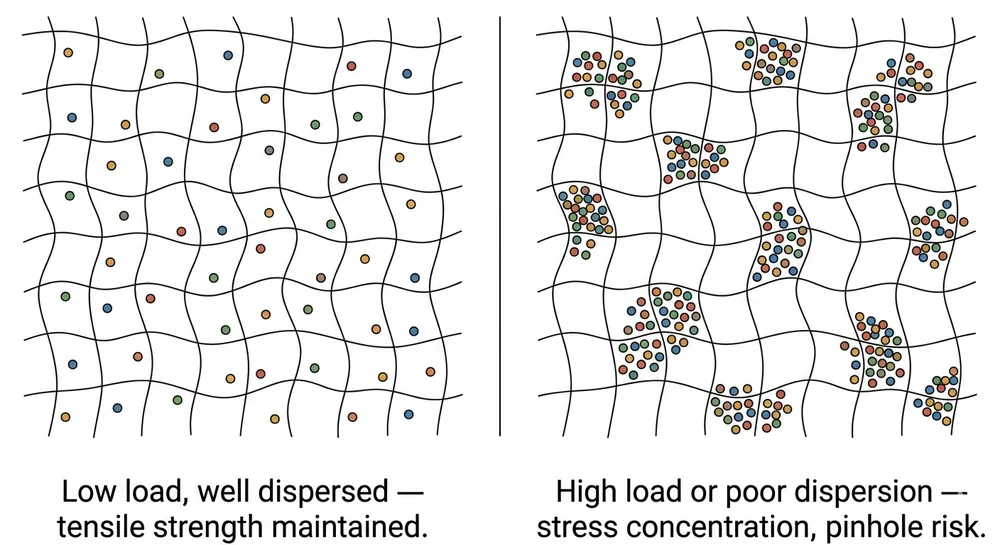
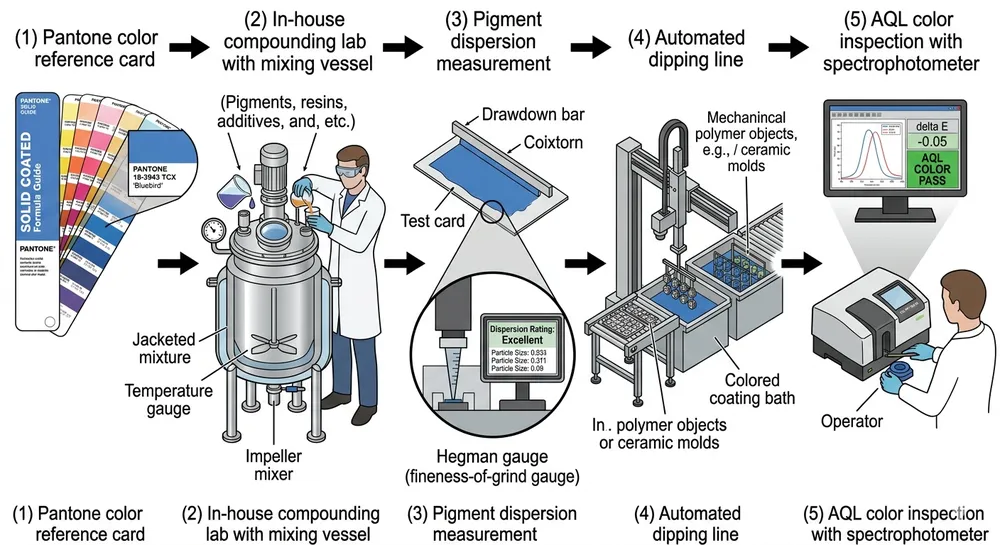
Nitrile gloves get their color from pigment dispersed directly into the nitrile compound before dipping. There's no coating, no dye bath, no post-process coloring step. The pigment goes into the latex compound at the compounding stage, and once the glove is dipped and cured, that color is locked in.
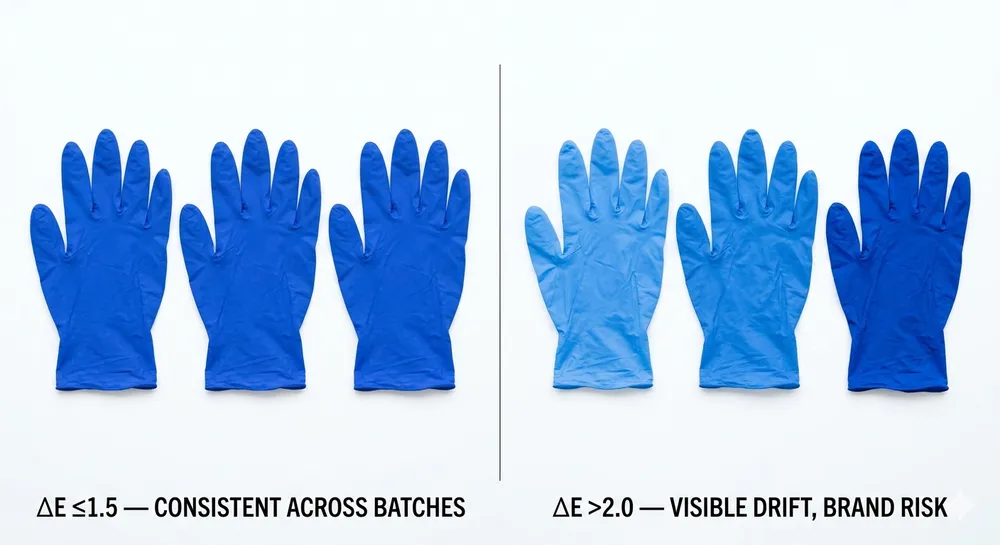
This means color consistency is entirely dependent on what happens in the compounding lab — pigment selection, dispersion method, concentration ratios, and how stable those ratios stay across batches. A supplier who buys pre-mixed compound from a third-party compounder has limited control over any of this. When the compounder changes their pigment supplier or adjusts their formula, your glove color shifts.
We run our own in-house compounding lab. Every colored SKU we produce — pink, blue, purple, black, green — has a documented formulation with fixed pigment concentration tolerances. When we reorder pigment, we qualify the new lot against the reference standard before it goes into production. (We've rejected pigment lots that passed the supplier's own spec but failed our internal color match — it happens more often than you'd expect with certain red-base pigments.)
The practical result: your second container matches your first. Your sixth matches your first. That's what a private-label color line requires.
The standard color range and what's actually stocked
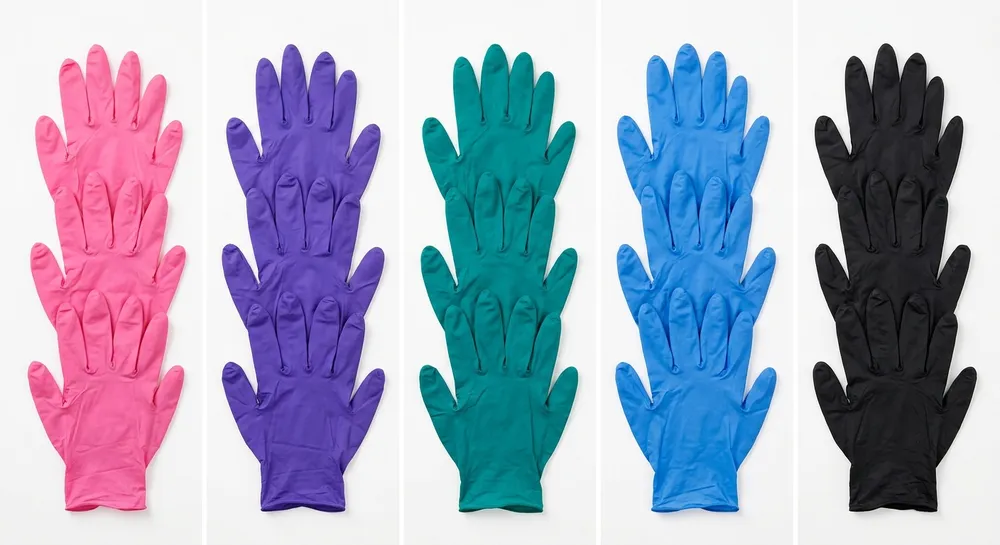
For distributors who don't need a custom color, our standard range covers the most commercially active SKUs:
| Color | Common Application Segments | Notes |
|---|---|---|
| Pink | Medical, dental, beauty, food service | Highest volume colored SKU globally |
| Blue | Food processing, pharmaceutical, cleanroom | Color-coding standard in many HACCP facilities |
| Purple | Chemotherapy drug handling, medical | Specific to chemo-rated formulations |
| Black | Automotive, tattoo, industrial | Thicker gauge typically specified |
| Green | Industrial, laboratory | Less common; often custom |
| White | Cleanroom, electronics assembly | Requires low-extractable formulation |
Pink is by far the highest-volume colored SKU we run. We keep pink in continuous production across multiple sizes, which means lead times are shorter and MOQ flexibility is higher for pink than for most other colors. If you're building a color glove line and want to start somewhere, pink is the lowest-risk entry point from a supply chain standpoint.
Pink Nitrile Gloves — product specifications, certifications, and size range for our standard pink SKU.
MOQ structure for colored nitrile gloves
MOQ for colored gloves works differently than for standard blue or clear nitrile. Here's how we structure it:
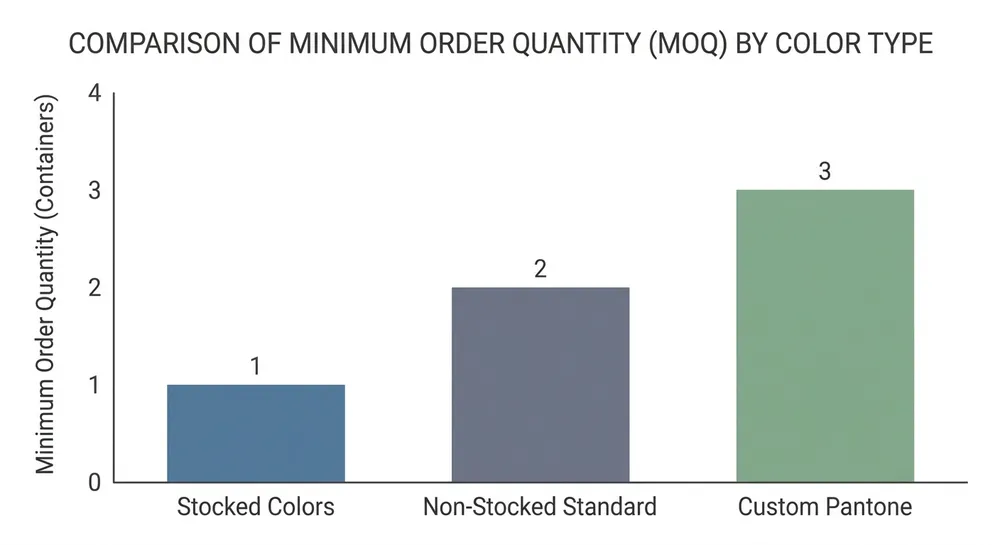
Standard stocked colors (pink, blue, black): 1 container, approximately 2,000 boxes (100 gloves/box, mixed sizes available). This is the same MOQ as our standard SKUs — no premium for color.
Non-stocked standard colors (purple, green, white): Minimum 2 containers. We run these on scheduled production cycles rather than continuous lines, so the minimum reflects the compounding batch size needed to hold color consistency.
Custom Pantone colors: Minimum 3 containers for the initial run. This covers the formulation development cost, the color approval sample set, and the production qualification run. Repeat orders after approval drop back to 2 containers.
A few things worth knowing before you commit to a custom color:
- Color approval requires a physical sign-off sample. We send you a production-matched sample set (typically 3 pairs per size), and you confirm against your reference before we run the full order. This step is non-negotiable — it protects both sides.
- Pantone matching for nitrile is not the same as Pantone matching for print. Nitrile compound has a translucency and surface texture that shifts perceived color. We work from the Pantone reference but the final match is confirmed on actual glove substrate, not on paper or screen.
- Some colors are harder to hold than others. Bright yellows and certain oranges have higher batch-to-batch variance in our experience — the pigment chemistry is less stable under the curing temperatures nitrile requires. We'll tell you this upfront if you request one of those colors.
Pigment compliance: what food-contact and medical buyers actually need
This is where a lot of distributors get caught out. A glove can be pink and still fail compliance for the market segment you're selling into — not because of the nitrile base, but because of the pigment.
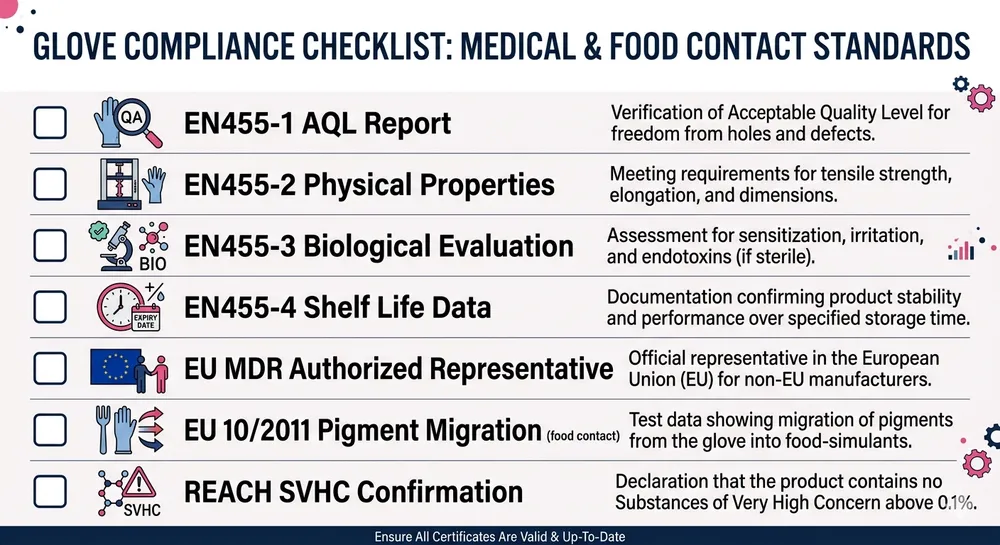
For food-contact applications, the pigment used in the nitrile compound needs to meet food-contact migration limits. In the EU, that means compliance with Regulation (EC) No 1935/2004 and the relevant specific migration limits for colorants. In the US, FDA 21 CFR applies. Not every pigment that produces a stable, attractive color in nitrile is food-contact compliant — some of the most color-stable pigments are heavy-metal based and explicitly excluded.
For medical-grade gloves, the pigment must not interfere with the glove's barrier performance or introduce extractables that could cause sensitization. Our medical-grade colored SKUs (including pink) are formulated with pigments that have been reviewed against EN455 and ASTM D6319 requirements. The FDA 510(k) clearance we hold covers our standard pink medical SKU.
For chemotherapy drug handling (the purple SKU specifically), the formulation requirements go further — the glove needs to pass ASTM D6978 permeation testing for chemotherapy drugs, and the pigment selection has to be compatible with that formulation. Purple became the de facto color standard for chemo gloves precisely because it's visually distinct and the color-coding reduces handling errors in clinical settings.
When you're sourcing colored gloves for a regulated end market, ask your supplier for the specific pigment compliance documentation — not just the glove certification. The glove cert covers the nitrile base; the pigment compliance is a separate question.
What custom OEM color development actually involves
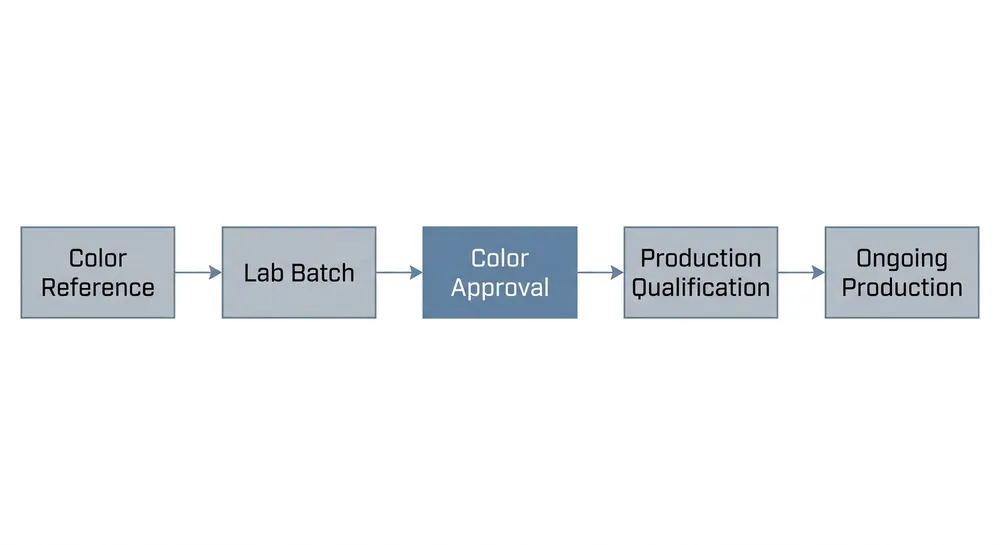
If you're building a private-label color glove line — your brand, your color, your packaging — here's the realistic process:
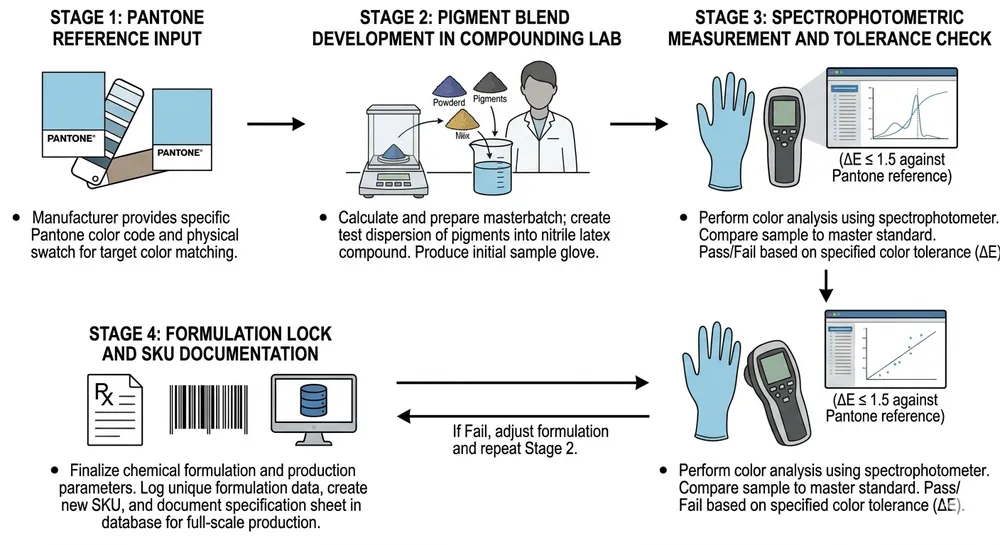
Step 1 — Color reference submission. You provide a Pantone code, a physical reference sample, or a hex value with context. We convert this to a working formulation target in our compounding lab.
Step 2 — Lab batch and sample production. We produce a small lab batch and dip a sample run. This typically takes 2–3 weeks from reference receipt. The sample set covers all sizes you've specified.
Step 3 — Color approval. You review the physical samples against your reference. If the match is within tolerance, you sign off. If not, we adjust the formulation and run another sample set. Most colors land within one or two rounds; complex colors (certain oranges, bright reds) sometimes take three.
Step 4 — Production qualification. Once color is approved, we run a qualification batch at full production scale to confirm the color holds under production conditions (line speed, dipping temperature, curing time all affect final color slightly). This is the batch that sets your production standard.
Step 5 — Ongoing production. Every subsequent run is checked against the approved production standard using our in-house colorimetry equipment. Batches outside tolerance are held and reformulated before shipping.
The whole process from color submission to first production container is typically 6–10 weeks depending on color complexity and sample round count. (We've done it faster for buyers with flexible color tolerance — and slower for buyers who needed an exact match to an existing branded product. The timeline is driven by the approval process, not by our production capacity.)
Color-coding strategy: the commercial case for stocking multiple colors
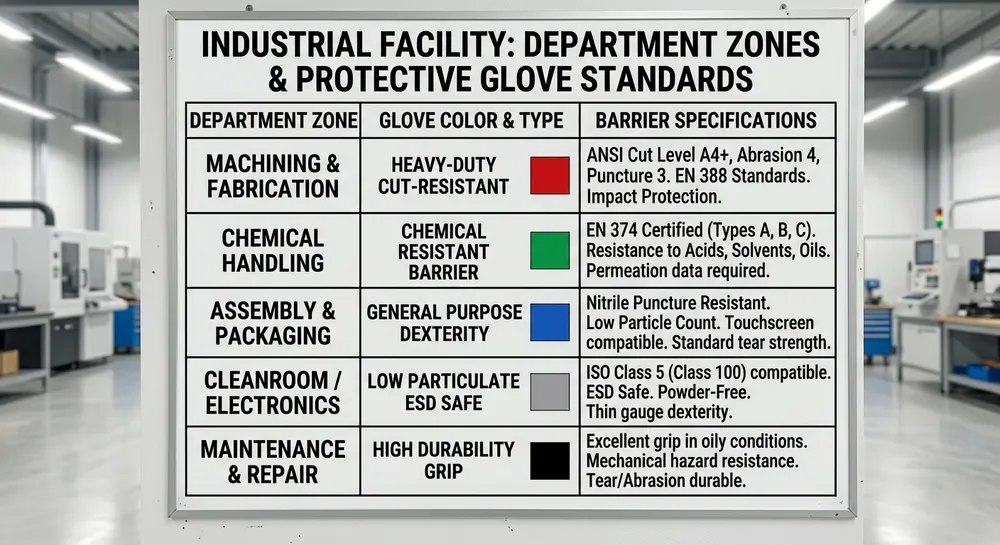
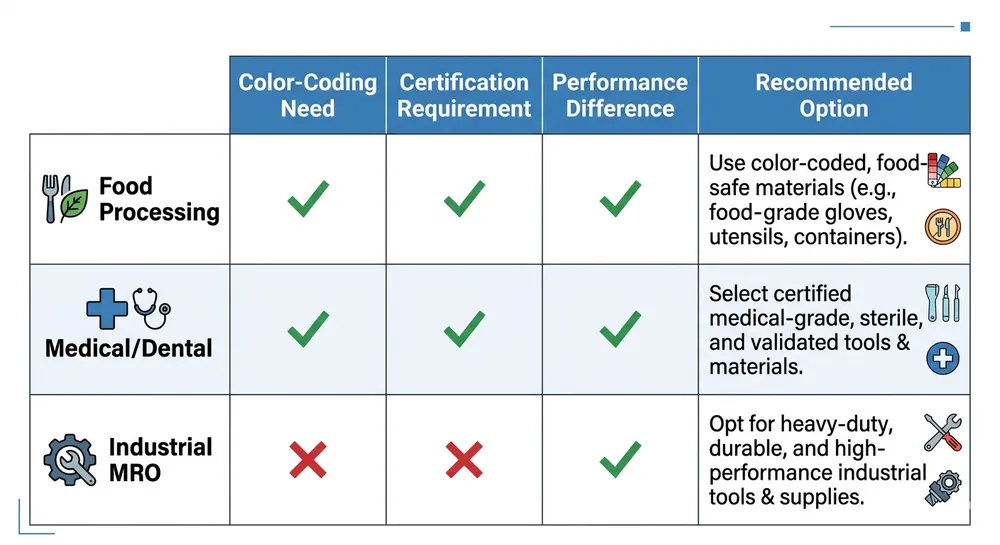
For distributors selling into facilities that use color-coding — food processing plants, hospitals, pharmaceutical manufacturers, multi-department industrial operations — stocking a color range isn't just a product line decision. It's a supply chain solution you can sell.
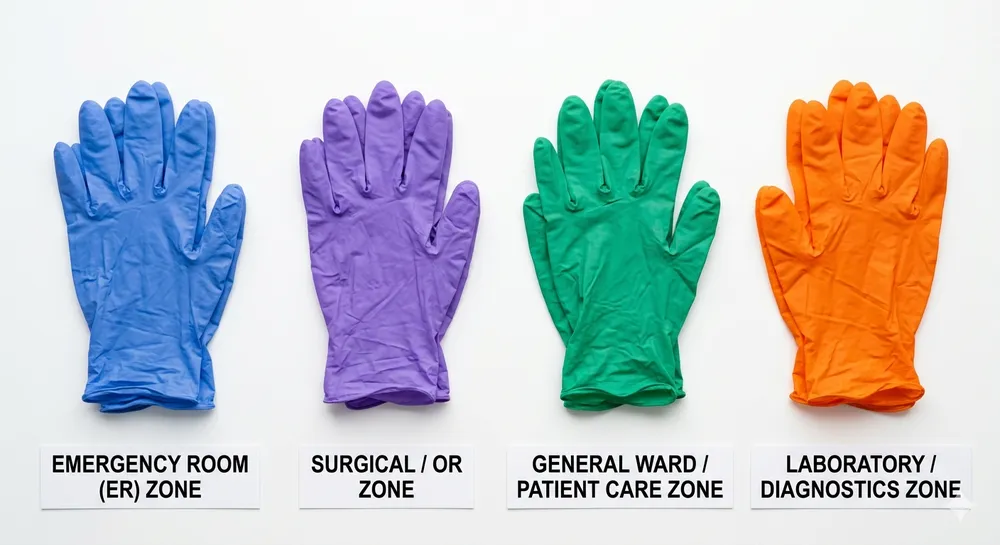
HACCP-compliant food facilities are required to use color-coded PPE to prevent cross-contamination between zones. A facility handling raw meat, ready-to-eat products, and cleaning chemicals needs three distinct glove colors — and they need those colors to be consistent across every reorder so staff can identify zones at a glance. If your supplier can't hold color consistency, the facility's color-coding protocol breaks down.
The same logic applies in hospital settings, where color-coded gloves help differentiate between departments or risk levels. And in pharmaceutical manufacturing, where color-coding is part of the contamination control strategy.
What this means for your distribution business: a buyer who adopts your color-coded glove line is harder to switch away from. The color becomes part of their internal protocol. Reorders are predictable. The account is stickier than a commodity blue glove account where any supplier can compete on price alone.
We've seen this play out with several of our US and European distributors who built color-coded programs around our pink and blue SKUs. The initial order is a trial; by the third reorder, the color is written into the facility's SOP.
Sourcing questions worth asking any colored glove supplier
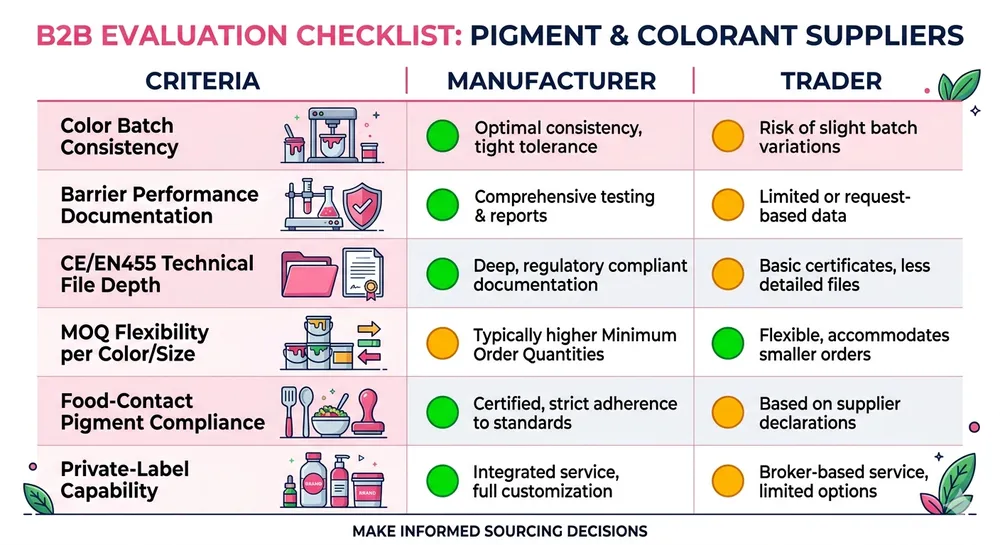
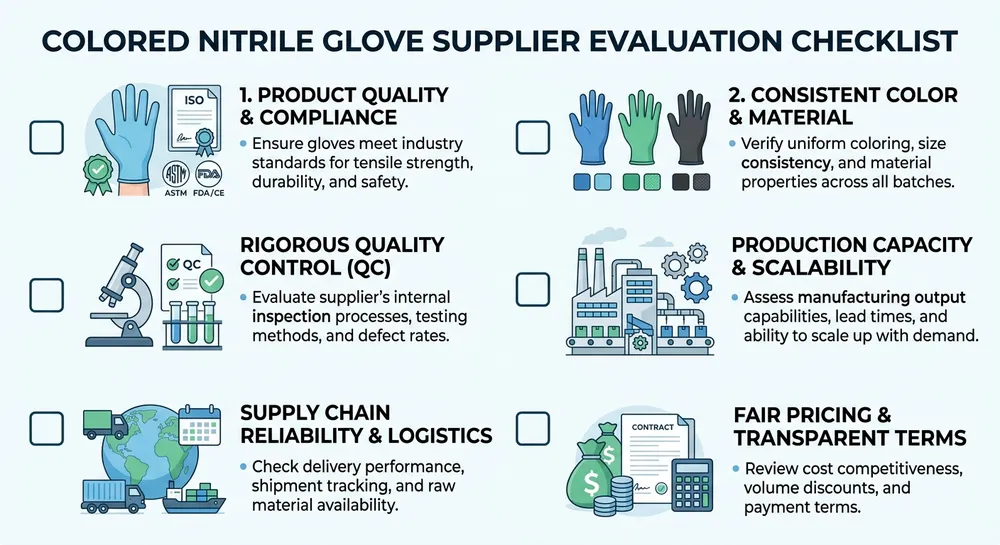
Before you commit to a colored glove supplier — us or anyone else — these are the questions that separate manufacturers with real formulation control from those who are just buying pre-colored compound:
- Do you compound in-house, or do you buy pre-mixed colored compound? In-house compounding means the supplier controls the pigment selection, concentration, and batch-to-batch consistency. Bought compound means they're dependent on their compounder's quality control.
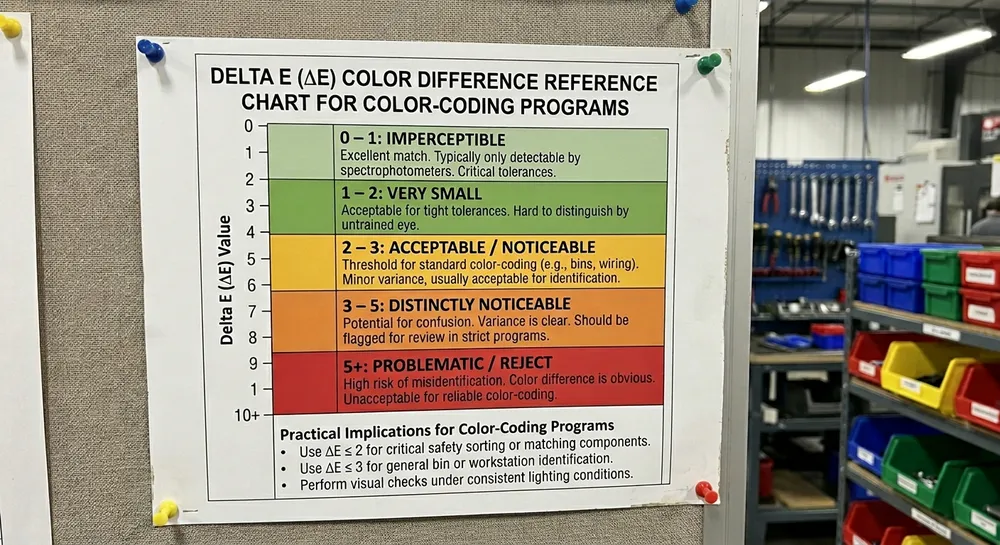
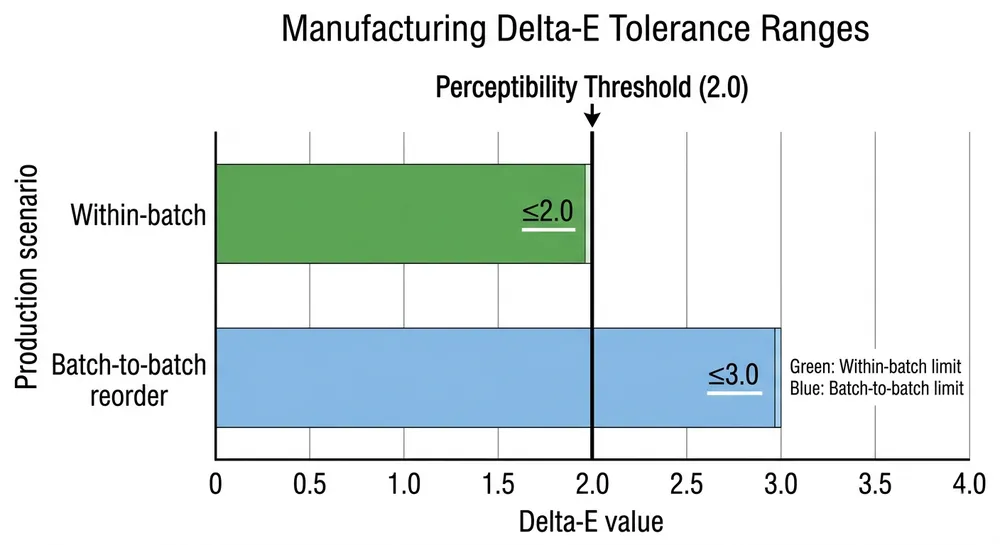
- What is your color tolerance standard, and how do you measure it? A credible answer involves colorimetry (ΔE values) and a documented tolerance range. "We visually inspect" is not a quality system.
- Can you provide pigment compliance documentation for food-contact or medical use? This should be a specific document, not a general statement about the glove certification.
- What is your batch-to-batch color consistency record? Ask for data, not a claim. If they can't show you historical ΔE data across production runs, they don't have it.
- What happens if a batch fails your color standard? The answer tells you whether they have a real QC gate or whether they ship and hope.
We can answer all of these with documentation. If a supplier can't, that's the information you need before you build a private-label color line on their production.
If you're ready to discuss a specific color requirement — standard pink, a stocked color, or a custom Pantone match — Request Quote with your target color, size range, and annual volume estimate. We'll come back with a formulation feasibility note and a landed cost estimate for your market.